Destination Unknown

Category: Travel guides

Blogs in this category relate to our travel and adventures as a family of five.

That encompasses our school bus conversion (“skoolie”) tour and travel in Europe. We started traveling in our skoolie, lovingly called the HildeBus, in May 2021 from Tampa, Florida. After 6 months on the road, we unexpectedly stopped full-time travel in October 2021 due to Eric’s surfing accident though we plan to continue travel recreationally soon.

During those 6 months of RVing in the United States, we drove from Florida roughly hugging the eastern coast. We traveled across 13 states: Florida, Georgia, South Carolina, North Carolina, Virginia, Maryland, Delaware, New Jersey, New York, Connecticut, New Hampshire, Maine, and Vermont.

We discovered a love for slower pace (staying a few days to weeks in one location) and exploration, rather than long days of driving. We also grew closer as a family since we spent 100% of our days and nights together.

We knew we craved something different than what the traditional American dream had to offer, and we found it.

  • Best Gifts for Tired Moms | 2024

    Best Gifts for Tired Moms | 2024

    Do You Know a Tired Mom?

    As a chronically tired mom with three children under 6-years old, I feel fully qualified to write about the gifts that I truly want as a “tired mom.” Of course, if you are not a self-proclaimed tired mom like I am, these are still wonderful gifts to receive. Finally, if you are married to or share a family with a tired mom, then consider purchasing one of the gifts from this list just because (meaning not for a special occasion), because you know it will brighten her day… but don’t forget the special occasions either!

    The long-and-the-short of it is that your tired mom needs to be celebrated, and these best gifts for tired moms that I compiled are things that I enjoy as a mom and yours may too. If you’re the child or partner of a mom and think she isn’t tired, you would likely be wrong. She needs extra love and support 365 days of the year. Though the products and services below are paid gifts, the free gifts are also valuable.

    Table of Contents

    Best Gifts for Tired Moms

    1. Amazon Audible Subscription

    I used to love sitting down and reading a book, but now sitting down feels more of a luxury with young children than I ever would have expected. Also, my eyes just get more tired at the end of the day, and reading doesn’t seem as attractive. What I have come to love instead is listening to a good audiobook because I can do it on-the-go  and it’s always with me when it’s on my phone.

    [lasso id=”5673″ link_id=”3343″ ref=”amzn-audible-premium-plus”]

    2. Kid-Free Vacation

    As fun as spending a vacation with your family is… is it really a vacation for a tired mom when you’re still acting as mom even on a vacation? Having the luxury of doing a vacation on your own revitalizes your mind and body, and helps you remember what life was like in slower times. It’s a lovely way to find yourself and sleep unaccompanied for a few days and relish in eating breakfast alone without the responsibility of helping another person. [Read about my kid-free vacation in France]

    One of our favorite ways to save money on vacations is to use our Capital One Venture X card, which gets us lounge access in most airports worldwide and we earn points on everyday purchases.

    3. Amazon Prime Subscription

    If you are at all like me, then he really watched all the good movies already on Netflix and are dying to watch something else. I’m definitely not going to pay for a new streaming subscription for myself, but if somebody gifted it to me.. oh, what a luxury!

    [lasso id=”5676″ link_id=”3344″ ref=”amzn-amazon-com-sign-up-for-prime-video”]

    4. Wash-And-Fold Laundry Service

    When we moved into our school bus RV,  we knew that we were going to be using laundromats during our time on the bus. When I tell you what an absolute blessing it was to take 6 months off of doing laundry, believe it. Many commercial laundromats offer this service these days. Simply drop off your dirty laundry in a laundry bag, and pick it up in a few hours washed, dried, and folded. 

    5. Personal Shopper Subscription

    Before I became a tired mom, I had time to pick out what I was going to wear and plan ahead for seasonal changes or events. Some days, I’m lucky if I brush my teeth for the whole 2-minutes as my electric toothbrush tells me to do. Having a remote personal shopper will not only recharge a wardrobe, but really take the time to understand what a tired mom is looking for as they grow into this new version of themselves.

    [lasso id=”5678″ link_id=”3345″ ref=”amzn-amazon-7″]

    6. Prime Try Before You Buy Subscription

    Carrying the mental load is tiresome to say the least. Receiving a subscription box provides a nice surprise of carefully curated goods that I may otherwise pick if I wasn’t so tired.

    [lasso id=”5677″ link_id=”3346″ ref=”amzn-amazon-6″]

    7. Book a Spa Service

    Surprise your tired mom with a relaxing day at the spa, complete with meals and drinks. 


    Conclusion to the Best Gifts for Tired Moms

    If you can relate to being a tired mom, I would love for you to leave a comment below. If you are the partner of a tired parent, what do you think about the list above?

    [lasso category=”best-gifts-for-tired-moms” link_id=”3347″ type=”list”]

    Disclosure: Some of the links in this article may be affiliate links, which can provide compensation to me at no cost to you if you decide to purchase a paid plan. Thank you, if you do. As an Amazon Associate I earn from qualifying purchases. This site is not intended to provide financial advice and is for entertainment only. Read our affiliate disclosure in our privacy policy.
  • Dressing for Swedish Fall: Family Attire

    Dressing for Swedish Fall: Family Attire

    Dressing a family for Swedish Fall

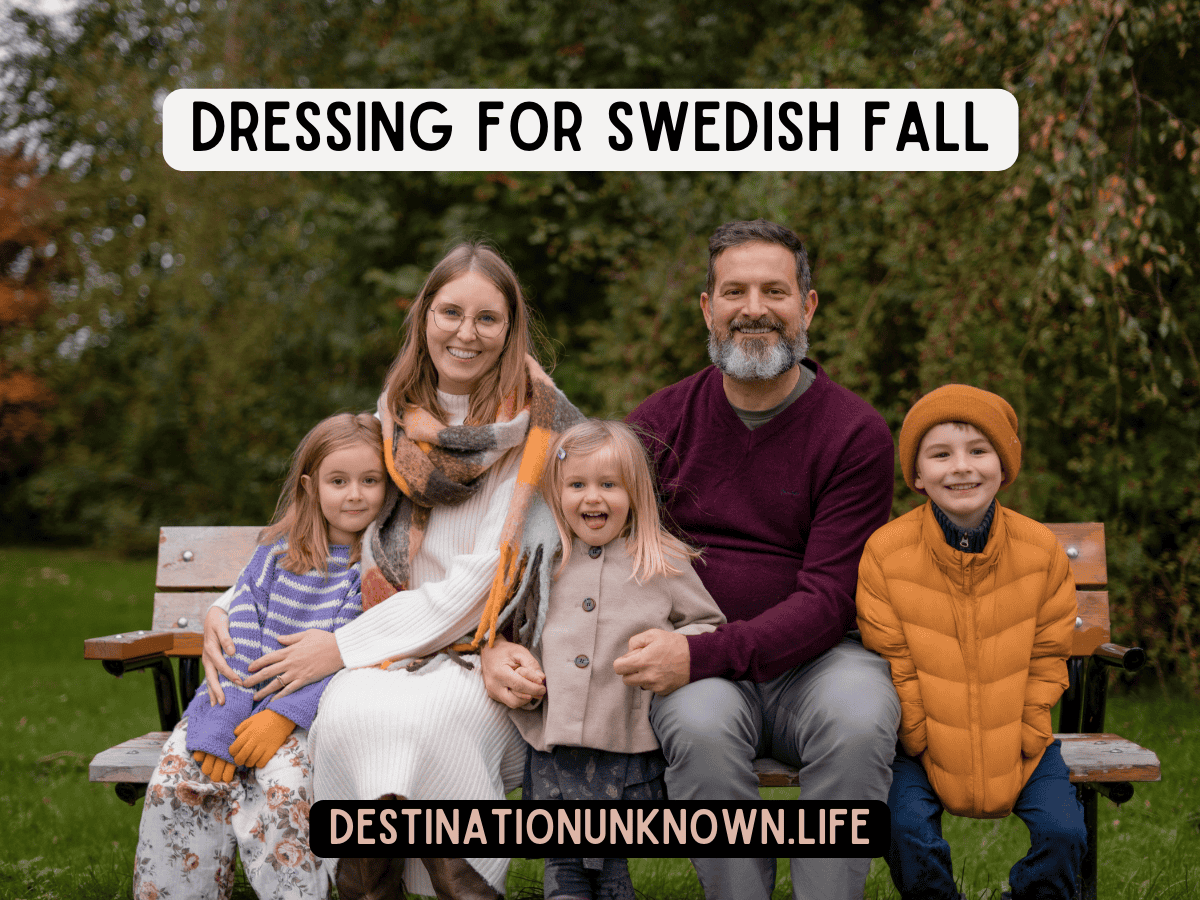
    Here are my best tips for dressing adults and children properly in Swedish fall, including the favorite products we wear. Our family of five relocated from tropical Florida in the Southern United States to Northern Sweden several years ago, and we were not prepared for everything we had to learn about dressing according to the seasons. The advice I share here is information that I wish I had known when we first moved here. 

    We wear fall clothing in Sweden in our region between August and October where temperatures dip to about -5 Celsius at night, increase during the day to between 5 to 10 Celsius, and the days are a mix of sunshine and rain! 

    We are a fairly active family, so my considerations are based on the fact that we spend time outdoors, whether walking to the grocery store or hunting for mushrooms in the forest. At the bottom of this post, I share our favorite fall clothes, comfy footwear, and necessary accessories to help you survive the varying temperatures and weather conditions. 

    Still feeling sad from winter? Read this blog for tips on beating the winter blues in Sweden.

    Table of Contents

    Build Clothing Layers for Proper Body Insulation

    The number one most important thing when dressing for Swedish fall is building layers of clothing on your body. Typically, this consists of one to three layers to protect yourself as outlined below. If water (think: cold rain) penetrates your base layers, you risk hypothermia, frostbite, or worse. The goal with layering is two-fold: 

    1. To insulate yourself against the cold temperatures, and 
    2. To keep yourself dry from the elements.

    Build clothing layers in a Swedish fall climate

    1. You’ll start with base layers, preferably a wool or wool blend product, for both your top and bottom. Wool is a natural breathable product that is also water-resistant and sweat-wicking, keeping your body dry.
      If you’re a person that runs warm normally, you may be able to leave these base layers off. I run cold so I feel most comfortable wearing long johns when temperatures are below 10 Celsius.
    2. The next layer will be your normal clothes, like jeans, a long-sleeved shirt, and light-weight wool socks.
    3. Building on that layer should be a sweater with a high neck. 
    4. Finally, you will put on your outerwear which protects you from the elements like snow, wind, and rain. The jacket should be lighter weight than a winter coat, but still lined on the interior and have a watertight exterior. Ideally, it should also have a wind-blocking element and a hood. If you’re going to be outside in the rain, then I highly recommend adding a pair of uninsulated rain pants. Of additional importance is a scarf or buff to protect your neck, an insulated hat that covers your ears and forehead, and gloves or mittens.
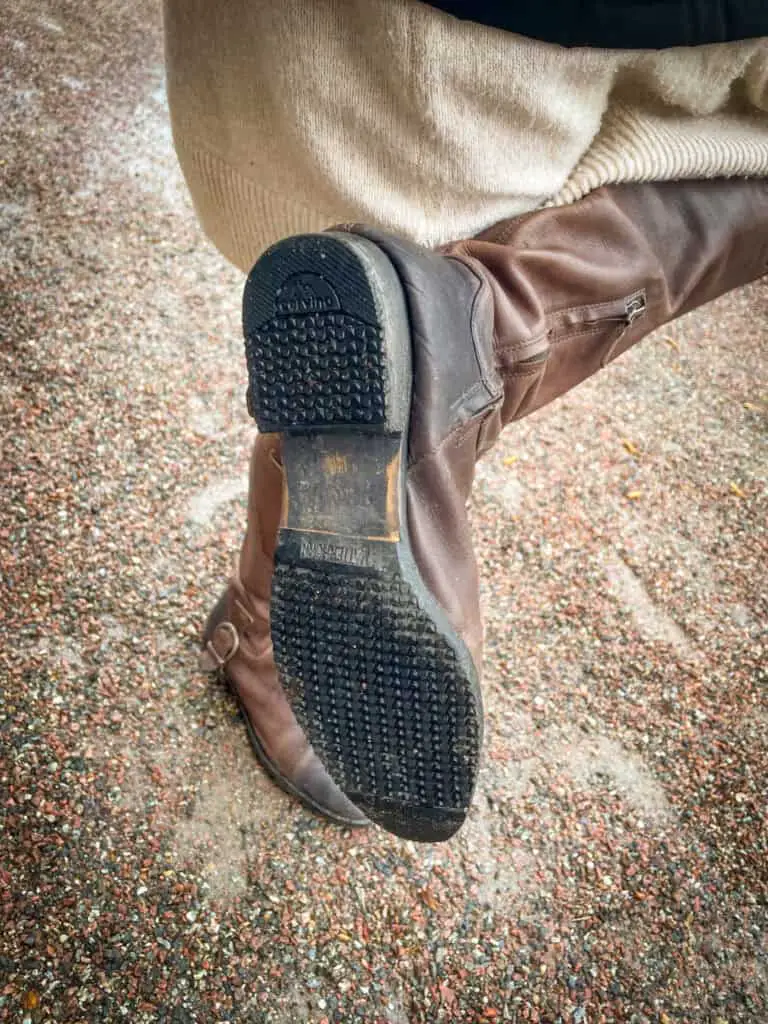
    5. Your boots should be waterproof and with a grippy, thicker sole. Early in the fall, you may still come across icy conditions, so I recommend adding slip-on ice spikes to your shoes on those days. An alternative is buying boots with ice cleats incorporated into the soles [see Ingrid’s recommendation].
    6. Bring a spare layer in case of accidents. Our rule of thumb is to add an extra layer, like extra gloves or hats. If you are too warm, then remove one. It’s a lot nicer than being truly uncomfortable as your body temperature plummets. 

    Adjust Clothing and Footwear for Colder Temperatures

    Walking to the store at 10 Celsius is a different activity than running through a sporadic rain storm at -5 Celsius. The clouds, rain, and sun often feel like they are fighting for space in the sky in the fall, and the weather changes rather quickly between them. Make sure you are ready for quick weather changes, so you’re not caught in the cold. 

    From personal experience, I realized quickly that I needed additional water protection in the form of rain pants.

    Protect yourself from ticks and mosquitos

    As magical as it is to pick fresh berries and forage for edible mushrooms in the magical Swedish forests, it comes with some actual risks from pests and insects. Take the mosquitos, evolution’s greatest creation. They survive in all climates and everyone dislikes them, especially young kids, and they’ve ruined a few lovely trips for us in the forest. Ticks are are dangerous pest. Though you can get a vaccine for one of the diseases they carry, it doesn’t cover the other.

    Instead, we try to prevent these guys all together by wearing longer sleeves and pants if we know they are bad and applying preventative spray. I’ve linked products that we’ve used in the past below or that have high-quality ingredients.

    [lasso category=”pest-and-sun-protection” columns=”3″ link_id=”3097″ type=”grid”]

    FAQ about Dressing for Swedish Fall

    What kind of warm clothes should you wear in Swedish fall?

    You’ll need to wear several layers of warm clothing during Swedish fall. First, wear wool or base layers on your top and bottom and medium-weight wool socks followed by a long-sleeved shirt and pants. Next, you’ll add a thick sweater and accessories like a scarf or buff, hat, and gloves. Your outer layers should include a waterproof jacket and uninsulated waterproof pants followed by thick-soled rain boots. Since this can be a rainy season, bring a spare change of clothes in case you get wet.

    For young children, we recommend that they dress about the same as in winter with a one-piece insulated (waterproof) snowsuit or layer a rain jacket and rain pants over their coats and pants, to protect them from the elements. 

    Where do you buy fall clothes in Sweden?

    Our favorite stores to shop for fall activewear clothes are Stadium and for boots are Scorett. Both of these stores have locations all over Sweden and offer limited repair services if parts of the purchase are damaged like a zipper going off track or a small tear in a rainsuit. 

    Scorett works with brands like Canada Snow and Polar, both of which offer cold temperature ratings on their boots (to as low as -40 Celsius).

    Conclusion to Dressing for Swedish Fall

    I hope my tips for dressing adults and children properly in Swedish fall are helpful. Like I said, learning to dress properly in the northern climate took some learning and adjusting, but it’s totally doable. Certainly, it makes experiencing the beautiful season a lovely time.

    If you like this Swedish content, then check out these related blogs:

    1. Family-friendly Activities in Sandviken, Sweden
    2. 1-Day Travel Itinerary to Gävle, Sweden
    3. Tips to Survive the Winter Blues in Sweden
    4. Cost of Eye Glasses in Sweden
    5. Cost of Preschool in Sweden
    6. Tips for Dressing for Swedish Winter
    7. Tips for Dressing for Swedish Spring
    8. Tips for Dressing for Swedish Summer
    9. Canada Snow Noel Winter Boots + Integrated Snow Cleats

    Disclosure: Some of the links in this article may be affiliate links, which can provide compensation to me at no cost to you if you decide to purchase a paid plan. Thank you, if you do. As an Amazon Associate I earn from qualifying purchases. This site is not intended to provide financial advice and is for entertainment only. Read our affiliate disclosure in our privacy policy.
  • Dressing for Swedish Summer: Tips for Families

    Dressing for Swedish Summer: Tips for Families

    Dress a family for Swedish Summer

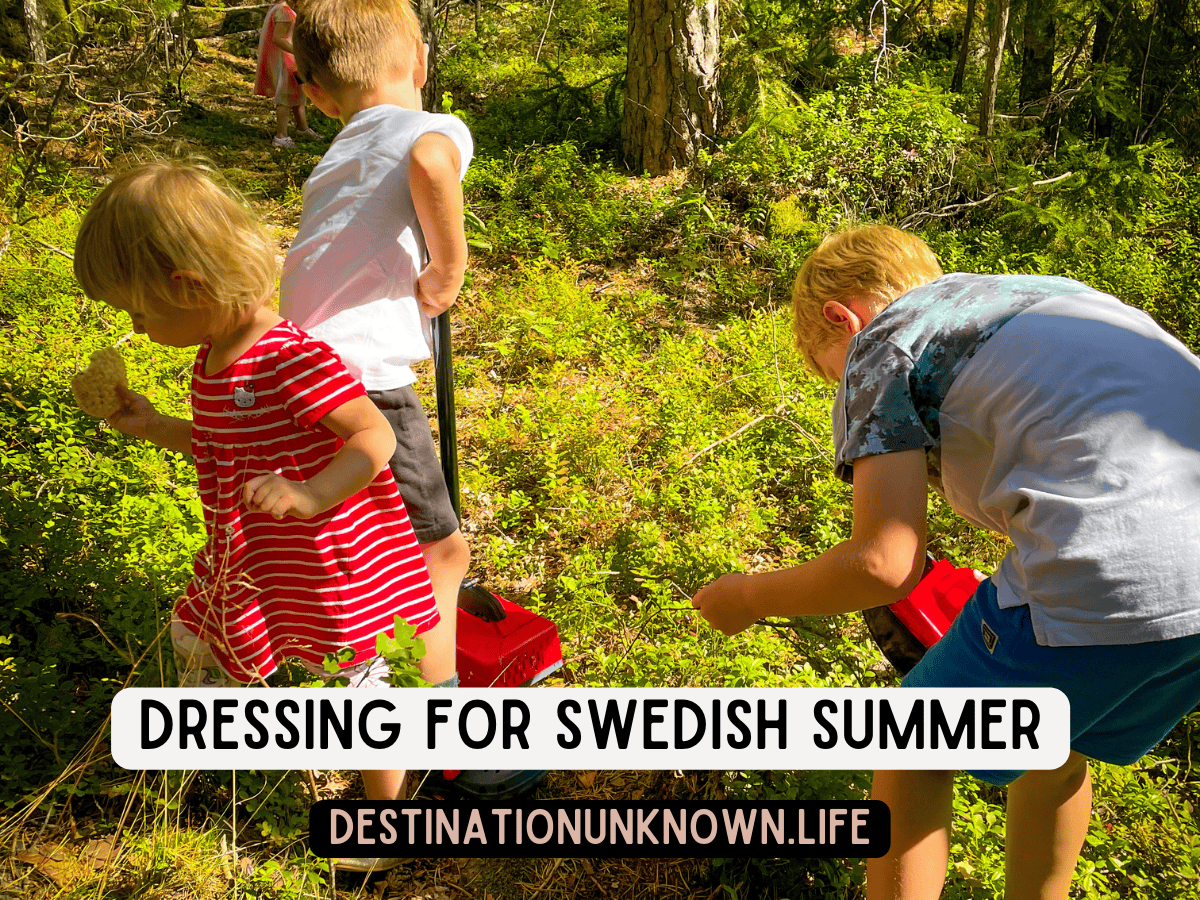
    I am sharing my top tips for dressing adults and children properly in Swedish Summer, including the favorite products we wear. Our family of five relocated from tropical Florida in the Southern United States to Northern Sweden several years ago, and we were not prepared for everything we had to learn about dressing according to the seasons. The advice I share here is information that I wish I had known when we first moved here. 

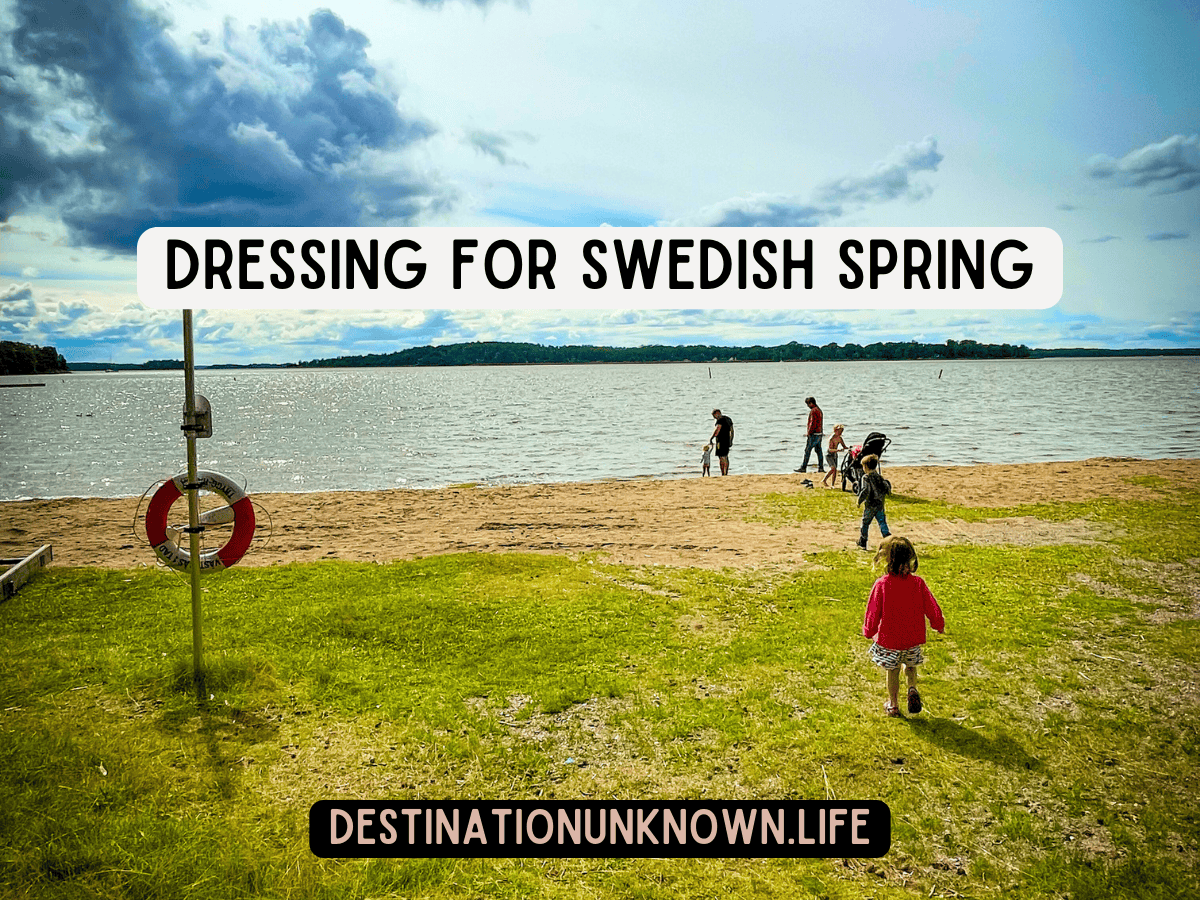
    We wear summer clothing in Sweden in our region between May and August where temperatures sit between 60 to 75 Celsius, depending on the weather conditions that day. We tend to have more vibrant sunshine than not; however, it’s possible to experience a rainy, overcast summer too.

    We are a fairly active family, so my considerations are based on the fact that we spend time outdoors, whether walking to the grocery store or hunting for mushrooms and berries in the forest. At the bottom of this post, I share our favorite summer clothes, comfy footwear, and necessary accessories to help you survive the varying temperatures and weather conditions. 

    Still feeling sad from winter? Read this blog for tips on beating the winter blues in Sweden.

    Table of Contents

    Build Clothing Layers for Proper Body Insulation

    The number one most important thing when dressing for Swedish summer is building layers of clothing on your body. This consists of one to three layers to protect yourself as outlined below. If water (think: cold rain) penetrates your base layers, you risk hypothermia. The goal with layering is two-fold: 

    1. To insulate yourself against the cold temperatures, and 
    2. To keep yourself dry from the elements.

    Build clothing layers in a Swedish winter climate

    1. Start with wearing your normal clothes, like shorts, a short-sleeved shirt, and sandals or sneakers with socks
    2. Building on that layer should be a light jacket or vest. 
    3. Finally, consider wearing or bring uninsulated rain gear or an umbrella. Ideally, it should also have a wind-blocking element and a hood. If you’re going to be outside in the rain, then I highly recommend adding a pair of uninsulated rain pants. 
    4. To protect yourself from the sun, wear a wide-brimmed hat and sunblock.
    5. Bring a swimsuit when you go out. It’s not uncommon to spot a lake and dive in for a cool dip!

    Adjust Clothing and Footwear for Rainy Days

    Walking to the store at 20 Celsius is a different activity than running through a rain storm at 10 Celsius. The weather can change rapidly, so make sure you are ready and not caught in the cold. For me and the kids, that means having an extra umbrella around, sunblock, and a towel.

    [lasso category=”kids-rain-gear-for-non-winter-months” columns=”4″ link_id=”3093″ title=”hide” type=”grid”]
    [lasso category=”adult-rain-gear-for-non-winter-months” columns=”3″ link_id=”3094″ type=”grid”]

    Protect yourself from ticks and mosquitos

    As magical as it is to pick fresh berries and forage for edible mushrooms in the magical Swedish forests, it comes with some actual risks from pests and insects. Take the mosquitos, evolution’s greatest creation. They survive in all climates and everyone dislikes them, especially young kids, and they’ve ruined a few lovely trips for us in the forest. Ticks are are dangerous pest. Though you can get a vaccine for one of the diseases they carry, it doesn’t cover the other.

    Instead, we try to prevent these guys all together by wearing longer sleeves and pants if we know they are bad and applying preventative spray. I’ve linked products that we’ve used in the past below or that have high-quality ingredients.

    [lasso category=”pest-and-sun-protection” columns=”3″ link_id=”3097″ type=”grid”]

    FAQ about Dressing for Swedish Summer

    What kind of warm clothes should you use in Swedish Summer?

    You’re usually able to dress comfortably in “normal” summer clothes in Sweden, if the temperatures are above 20 Celsius. I recommend always having a vest and rain coat on hand in case it gets windy or starts to rain. The sun is also nearly constant during this time of the year, so wear sun protection like a wide-brimmed hat, sunglasses, and sunblock.

    For young children, we recommend having a rain jacket with rain pants and boots to protect them from the elements in case of a storm. 

    Where do you buy Summer clothes in Sweden?

    Our favorite stores to shop for Summer activewear clothes are Stadium and for boots and sneakers are Scorett. Both of these stores have locations all over Sweden, and offer limited repair services if parts of the purchase are damaged like a zipper going off track or a small tear in a rainsuit. 

    Scorett works with brands like Björn Borg, Echo, Canada Snow and Polar, both of which offer cold temperature ratings on their boots (to as low as -40 Celsius).

    Conclusion to Dressing for Swedish Summer

    I hope my tips for dressing adults and children properly in Swedish Summer are helpful. Like I said, learning to dress properly in the northern climate took some learning and adjusting, but it’s totally doable. Certainly, it makes experiencing the beautiful season a lovely time.

    If you like this Swedish content, then check out these related blogs:

    1. Family-friendly Activities in Sandviken, Sweden
    2. 1-Day Travel Itinerary to Gävle, Sweden
    3. Tips to Survive the Winter Blues in Sweden
    4. Cost of Eye Glasses in Sweden
    5. Cost of Preschool in Sweden
    6. Tips for Dressing for Swedish Winter
    7. Tips for Dressing for Swedish Spring
    8. Tips for Dressing for a Swedish Fall
    9. Canada Snow Noel Winter Boots + Integrated Snow Cleats

    Disclosure: Some of the links in this article may be affiliate links, which can provide compensation to me at no cost to you if you decide to purchase a paid plan. Thank you, if you do. As an Amazon Associate I earn from qualifying purchases. This site is not intended to provide financial advice and is for entertainment only. Read our affiliate disclosure in our privacy policy.
  • Dressing for Swedish Spring: A family edition 

    Dressing for Swedish Spring: A family edition 

    Dress a family for Swedish Spring

    I am sharing my top tips for dressing adults and children properly in Swedish spring, including the favorite products we wear. Our family of five relocated from tropical Florida in the Southern United States to Northern Sweden several years ago, and we were not prepared for everything we had to learn about dressing according to the seasons. The advice I share here is information that I wish I had known when we first moved here. 

    We wear spring clothing in Sweden in our region between March and May where temperatures regularly dip to below freezing at night, increase during the day to between 5 to 10 Celsius, and the days are a mix of sunshine and rain or snow! 

    We are a fairly active family, so my considerations are based on the fact that we spend time outdoors, whether walking to the grocery store or hunting for mushrooms and berries in the forest. At the bottom of this post, I share our favorite spring clothes, comfy footwear, and necessary accessories to help you survive the varying temperatures and weather conditions. 

    Still feeling sad from winter? Read this blog for tips on beating the winter blues in Sweden.

    Table of Contents

    Build Clothing Layers for Proper Body Insulation

    The number one most important thing when dressing for Swedish spring is building layers of clothing on your body. Typically, this consists of one to three layers to protect yourself as outlined below. If water (think: cold rain) penetrates your base layers, you risk hypothermia, frost bite, or worse.

    The goal with layering is two-fold: 

    1. To insulate yourself against the cold temperatures, and 
    2. To keep yourself dry from the elements.

    Build clothing layers in a Swedish winter climate

    1. You’ll start with base layers, preferably a wool or wool blend product, for both your top and bottom. Wool is a natural breathable product that is also water-resistant and sweat-wicking, keeping your body dry.
      If you’re a person that runs warm normally, you may be able to leave these base layers off. I run cold so I feel most comfortable wearing long johns when temperatures are below 10 Celsius.
    2. The next layer will be your normal clothes, like jeans, a long-sleeved shirt, and light-weight wool socks.
    3. Building on that layer should be a sweater with a high neck. 
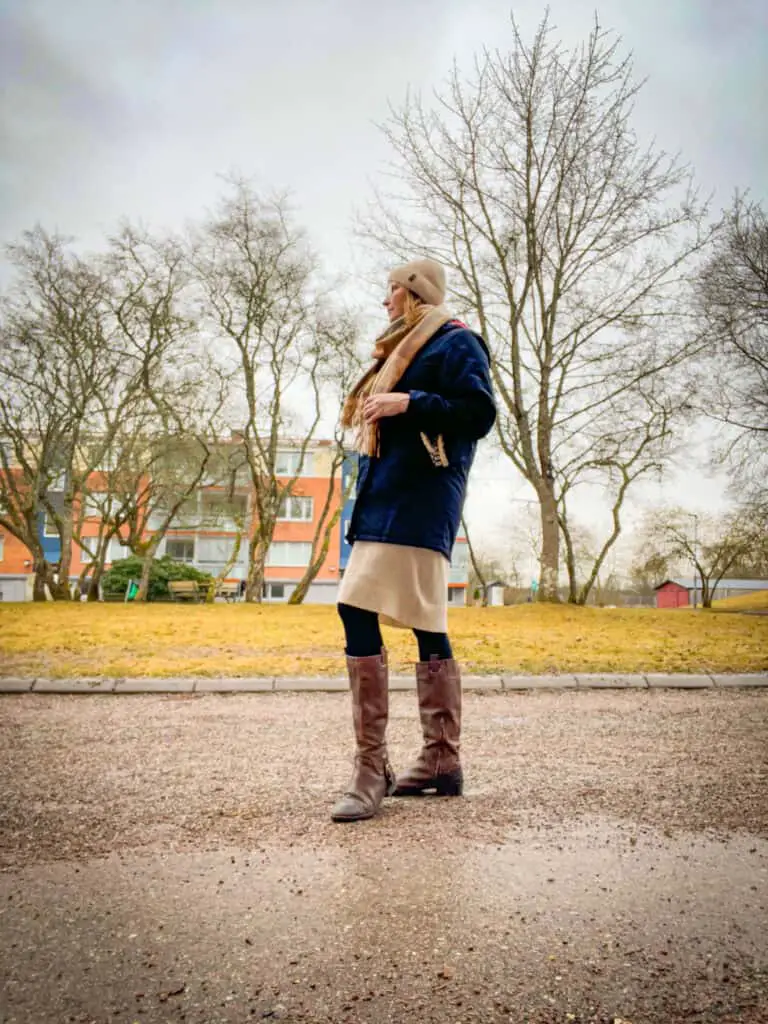
    4. Finally, you will put on your outerwear which protects you from the elements like snow, wind and rain. The jacket should be lighter weight than a winter coat, but still lined on the interior and have a watertight exterior. Ideally, it should also have a wind blocking element and a hood. If you’re going to be outside in the raig, then I highly recommend adding a pair of uninsulated rain pants. Of additional importance is a scarf or buff to protect your neck, an insulated hat that covers your ears and forehead, and gloves or mittens.
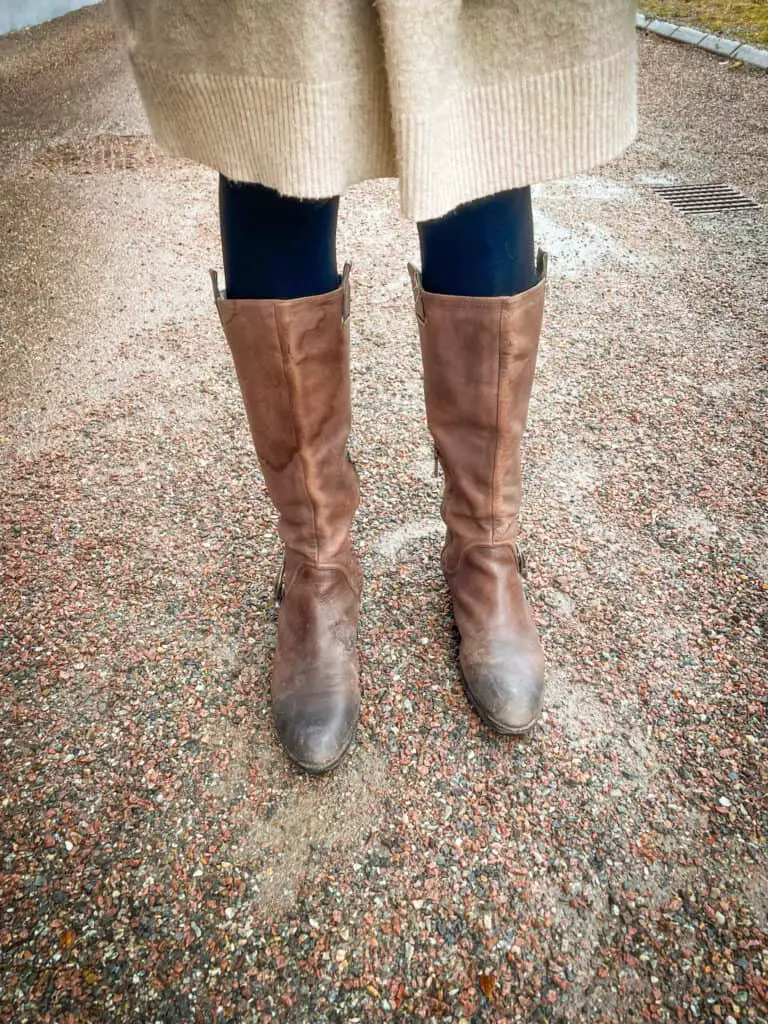
    5. Your boots should be waterproof and with a grippy, thicker sole. Early in the spring, you may still come across icy conditions, so I recommend adding slip-on ice spikes to your shoes on those days. An alternative is buying boots with ice cleats incorporated into the soles [see Ingrid’s recommendation].
    6. Bring a spare layer in case of accidents. Our rule of thumb is to add an extra layer, like extra gloves or hats. If you are too warm, then remove one. It’s a lot nicer than being truly uncomfortable as your body temperature plummets. 

    Adjust Clothing and Footwear for Colder Temperatures

    Walking to the store at 10 Celsius is a different activity than running through a sporadic ice or rain storm at -10 Celsius. The clouds, rain, and sun often feel like they are fighting for space in the sky in the spring, and the weather changes rather quickly between them. Make sure you are ready for quick weather changes, so you’re not caught in the cold. 

    From personal experience, I realized quickly that I needed additional water protection in the form of rain pants.

    [lasso category=”kids-rain-gear-for-non-winter-months” columns=”4″ field=”hide” link_id=”3009″ title=”hide” type=”grid”]
    [lasso category=”adult-rain-gear-for-non-winter-months” columns=”3″ link_id=”3010″ type=”grid”]

    Protect yourself from ticks and mosquitos

    As magical as it is to pick fresh berries and forage for edible mushrooms in the magical Swedish forests, it comes with some actual risks from pests and insects. Take the mosquitos, evolution’s greatest creation. They survive in all climates and everyone dislikes them, especially young kids, and they’ve ruined a few lovely trips for us in the forest. Ticks are are dangerous pest. Though you can get a vaccine for one of the diseases they carry, it doesn’t cover the other.

    Instead, we try to prevent these guys all together by wearing longer sleeves and pants if we know they are bad and applying preventative spray. I’ve linked products that we’ve used in the past below or that have high-quality ingredients.

    [lasso category=”pest-and-sun-protection” columns=”3″ link_id=”3097″ type=”grid”]

    FAQ about Dressing for Swedish Spring

    What kind of warm clothes should you use in Swedish spring?

    You’ll need to wear several layers of warm clothing during Swedish spring. First, wear wool or base layers on your top and bottom and medium-weight wool socks followed by a long-sleeved shirt and pants. Next, you’ll add a thick sweater and accessories like a scarf or buff, hat, and gloves. Your outer layers should include a waterproof jacket and uninsulated waterproof pants followed by thick-soled rain boots. Since this can be a rainy season, bring a spare change of clothes in case you get wet.

    For young children, we recommend that they dress about the same as in winter with a one-piece insulated (waterproof) snowsuit or layer a rain jacket and rain pants over their coats and pants, to protect them from the elements. 

    Where do you buy spring clothes in Sweden?

    Our favorite stores to shop for spring activewear clothes are Stadium and for boots are Scorett. Both of these stores have locations all over Sweden, and offer limited repair services if parts of the purchase are damaged like a zipper going off track or a small tear in a rainsuit. 

    Scorett works with brands like Canada Snow and Polar, both of which offer cold temperature ratings on their boots (to as low as -40 Celsius).

    Conclusion to Dressing for Swedish Spring

    I hope my tips for dressing adults and children properly in Swedish spring are helpful. Spring is the time of year when everything comes back to life, including tired moms.

    Like I said, learning to dress properly in the northern climate took some learning and adjusting, but it’s totally doable. Certainly, it makes experiencing the beautiful season a lovely time.

    If you like this Swedish content, then check out these related blogs:

    1. Family-friendly Activities in Sandviken, Sweden
    2. 1-Day Travel Itinerary to Gävle, Sweden
    3. Tips to Survive the Winter Blues in Sweden
    4. Cost of Eye Glasses in Sweden
    5. Cost of Preschool in Sweden
    6. Tips for Dressing for Swedish Winter
    7. Tips for Dressing for Swedish Summer
    8. Tips for Dressing for Swedish Fall
    9. Canada Snow Noel Winter Boots + Integrated Snow Cleats

    Disclosure: Some of the links in this article may be affiliate links, which can provide compensation to me at no cost to you if you decide to purchase a paid plan. Thank you, if you do. As an Amazon Associate I earn from qualifying purchases. This site is not intended to provide financial advice and is for entertainment only. Read our affiliate disclosure in our privacy policy.
  • CANADA SNOW Noel Kängor Broddar Review | Reversible Ice Cleats | 2024

    CANADA SNOW Noel Kängor Broddar Review | Reversible Ice Cleats | 2024

    CANADA SNOW Noel Kängor Broddar Review

    When I first moved to Sweden, I struggled finding boots that kept my feet warm and from slipping on icy terrain. If you’re new to living in a cold winter climate like I was, then you quickly realize that the icy streets and frozen, wet toes will quickly ruin your experience here. Having lived in a tropical climate my entire life, I didn’t know where to begin my search and if I was buying a quality winter boot – these boots usually cost well over $200 in stores! Thankfully, after living in Sweden for two years, I can confidently say that I have found my favorite everyday winter boots that keep my tootsies warm, offer excellent grip with integrated ice cleats, and look stylish.

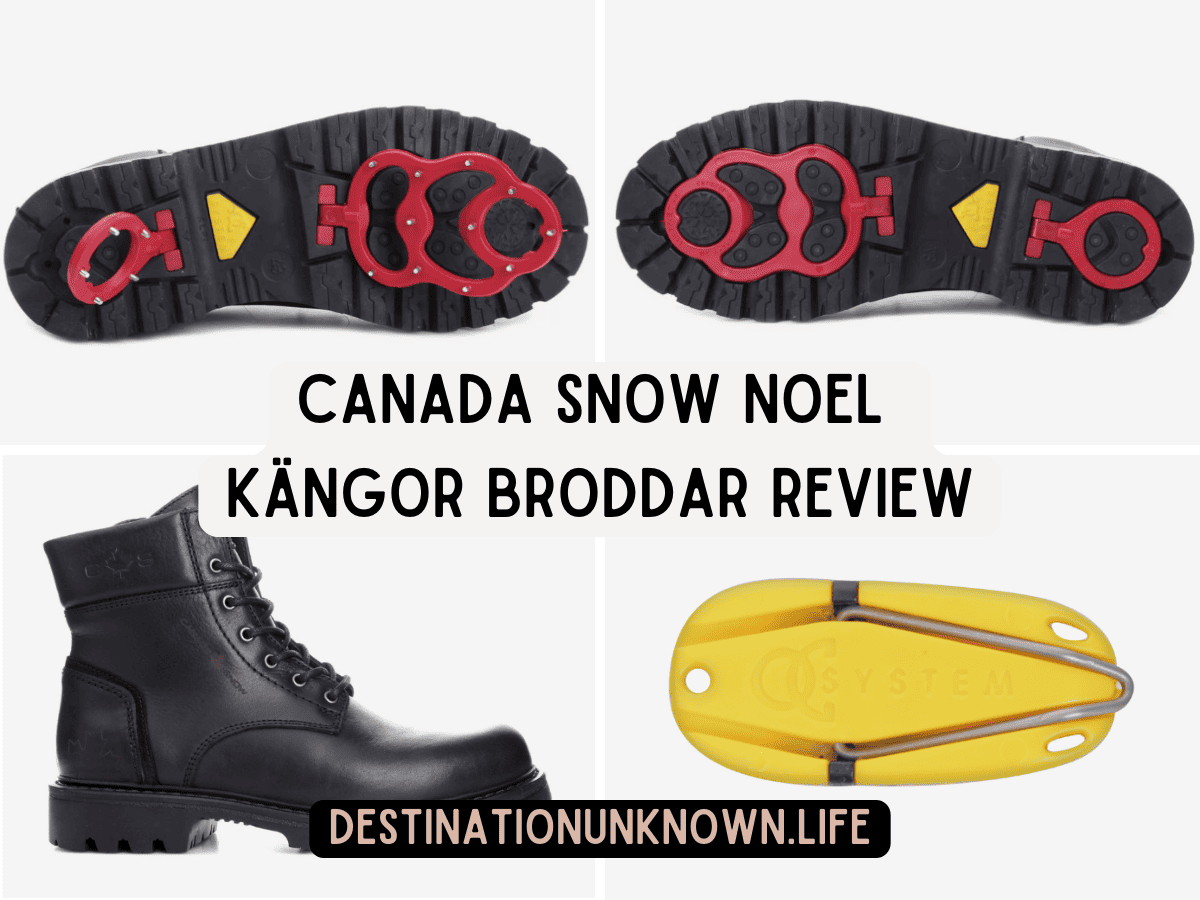
    The CANADA SNOW Noel Kängor Broddar is my top choice for everyday winter boots. After two winter seasons, I am incredibly satisfied with the overall quality of the boot, especially the exterior body and the soles. The soles are the most intriguing part of the boot because they offer an unique feature: reversible ice spikes. These are the shoes to buy if you want extra security against slipping in icy conditions without having to carry around aftermarket ice cleats. To activate the cleats, you simply use a special included key to flip them over on the soles of your shoes. When they’re no longer needed, simply flip them back to the smooth side.

    What’s to Like

    • Smooth leather finish
    • Easy to clean
    • Stylish combat boot look
    • Integrated, reversible ice grips
    • Quality built insulated boot
    • Excellent traction

    What’s Not to Like

    • The shoes perform best in temperatures warmer than -15 celsius
    • Stones easily get wedged in the soles
    • High price
    [lasso id=”5581″ link_id=”2832″ ref=”canada-snow-noel-kngor-broddar-2124971-scorett-se”]

    FAQ about CANADA SNOW Noel Kängor Broddar

    Where can you purchase the CANADA SNOW Noel Kängor Broddar?

    If you’re in Sweden, you can find the Canada Snow line at Scorett stores. If you’re outside of Sweden, you can order directly from the brand’s website.

    What if something breaks on the boot?

    I actually experienced one of the cleats breaking in 2023 and then a zipper on the side broke in 2024. In both cases, I took them back to the store I purchased them (Scorett in Sweden) and both repairs were made free of charge to me, and it only took a couple of days for the shoemaker to do the work. If you’re outside of Sweden and don’t have this service, check with the brand or store that you purchased the boots from to see what options are available to you.

    Conclusion to the CANADA SNOW Noel Kängor Broddar

    The CANADA SNOW Noel Kängor Broddar is and continues to be my top choice for everyday winter boots. This is my honest and unpaid review – I really like the boots! Let me know in the comments if you have bought these boots.

    If you like this content, then you may be interested in these other blogs: