
Is it Possible to Insulate a Completed Bus Conversion?
In short, no! It’s not possible to properly insulate a bus conversion after the construction is complete. Installing insulation in a bus conversion or

What are the Benefits of Insulating a Bus Conversion?
If you plan to live in your bus conversion or
Temperature variances lead to moisture and moisture leads to mold
Temperature variances like the cold exterior against a warm interior (or vice versa) will create condensation where the two temperature zones meet, a thermal bridge. You’ve probably seen this occurring in your own cool home or car on a hot day along a window sill or on the glass. Do you remember the steamy car scene in the Titanic between Rose and Jack?
You may even have seen mold or mildew in these locations. Imagine this happening throughout your entire tiny home! To make matters worse, if you have finished interior walls over uninsulated exterior walls, then this moisture build-up will occur where you can’t see it.
Adding insulation with a high R-value will create a thermal break, which is just a fancy way of saying a product that separates the two temperature zones.
Energy-efficiency
If you have performed an energy audit to determine how much energy you plan to use in your rig, then you’ll understand that trying to heat an uninsulated vehicle is like leaving the door open so the heat escapes. In this metaphor, the “door” is actually your uninsulated walls, ceilings, and floors.
It is worth mentioning that you can also replace your original windows with an insulated glass product, which will help with efficiency too.
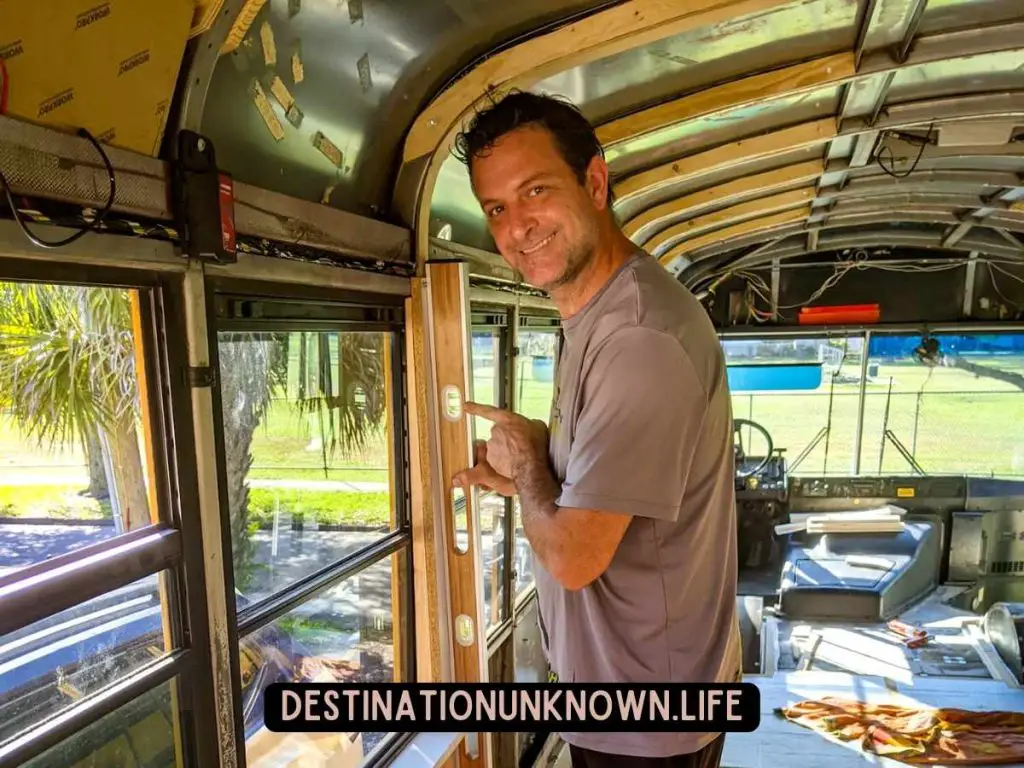
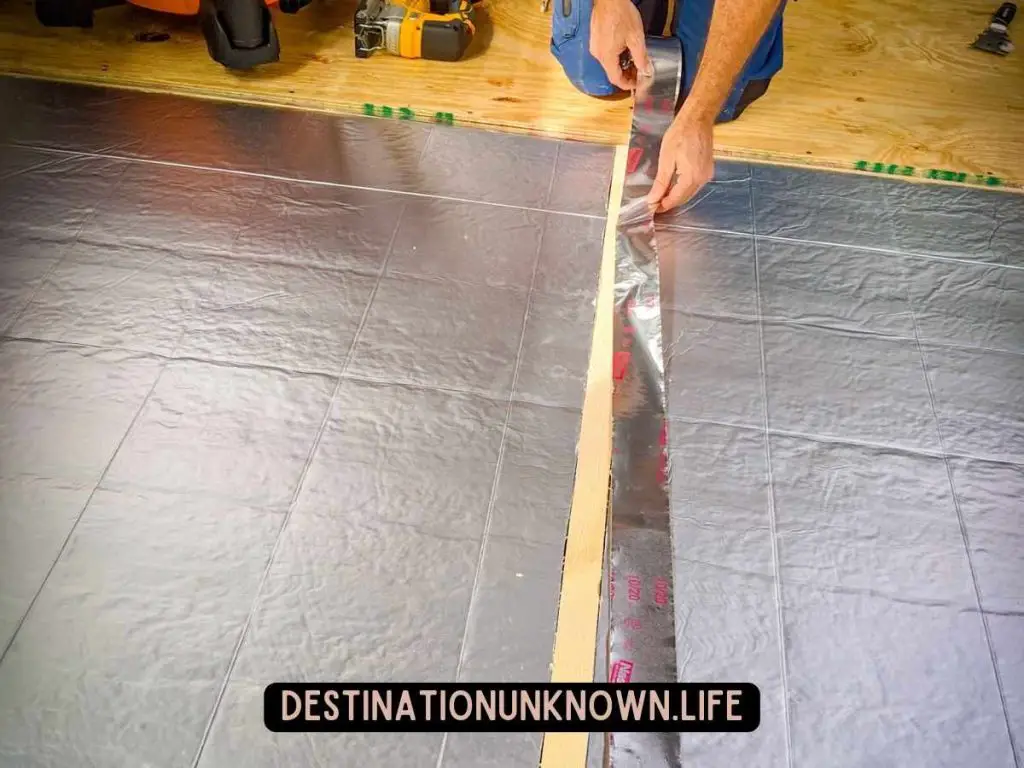
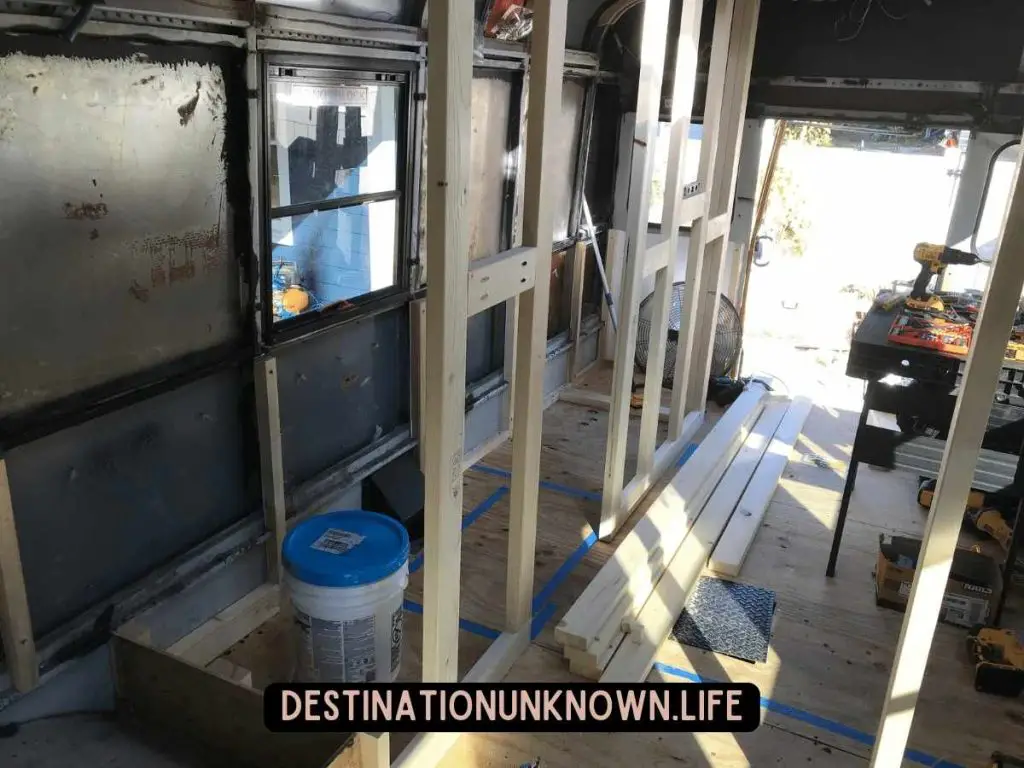
What are the Cons to Insulating a Bus Conversion?
These are the most common cons to insulating a bus conversion that I’ve come across through forums and Facebook groups. These aren’t based on my opinions because I fully support insulating an RV for a number of reasons, which are highlighted in the Benefits section.
Cost
Insulation costs money and if you’ve got a tight budget this may not fit into it. To put it in perspective, we used spray foam products by Tiger Foam and it cost us around $1,000 to do it ourselves.
Health and Sustainability
You may not have access to environmentally-friendly insulation (like wool), and don’t want to place more chemicals around your home than necessary. My husband had to wear a body suit with ventilated mask to install the spray foam product we used. Fiberglass insulation requires the use of gloves, long sleeves, and masks as well.
Time Constraints During Construction
If you’ve got to complete your build quickly, then you’ll save time by skipping this step.
Occupancy
If you’re going to use your rig seasonally or for short-term trips like a weekend warrior, then maybe it’s not so important to insulate.
Mild Climates
If you live in an area where the climate is mild year-round and you have your windows open all the time to capture those perfect temperatures, then skipping insulation could be okay. This reasoning is why this couple in Hawaii chose not to insulate their van.
To insulate or not to insulate
What do you think about this topic? Would you ever build a bus conversion and skip insulation? What products did you use in your rig and why? Let me know in the comments below.
If you’re considering building a