If you’ve lived for any time in an RV, you’ve likely discovered that keeping it clean is a feat short of a miracle. With the constant traffic out from your rig to the outdoors and back in again, it can seem like a never-ending battle to fight dirt and dust. However, modern technology has blessed us with vacuum cleaners!
Check out my list of the best RV vacuums. I will rank them based on features like weight, compact design, attachments, and personal experience.
Check out this blog for a product list of everything we put into our skoolie.
We’ve had this dyson stick vacuum for a few years now, and it’s been great for tiny spaces, like our RV. I love that there are color options (ours is pink!), and it’s lightweight. The dust cannister is easy to empty and the charge holds for an hour at least. It’s quite long (just over 4 ft long) and narrow, so it’s easy to store vertically in our utility closet. This vacuum works well on all floor types and is designed for homes with pets. It comes with several attachments too that help you reach the hard-to-reach spaces. Charging is simple, just place the vacuum on the charging station.
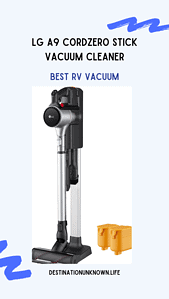
LG is a brand known for quality and longevity, and they’ve created a quality stick vacuum that is both compact though on the high-end of the price spectrum. Big perks are the flexible storage and charging options: you can wall mount the vacuum, charge it on it’s floor stand, or dismantle the pole from the charge block (handle) and slip that onto the base. This makes it my top pick of the best RV vacuums. There are four color choices to choose from. All the filters and interior parts of washable by hand, and you can add an additional filter if you’re worried about allergies and bacteria.
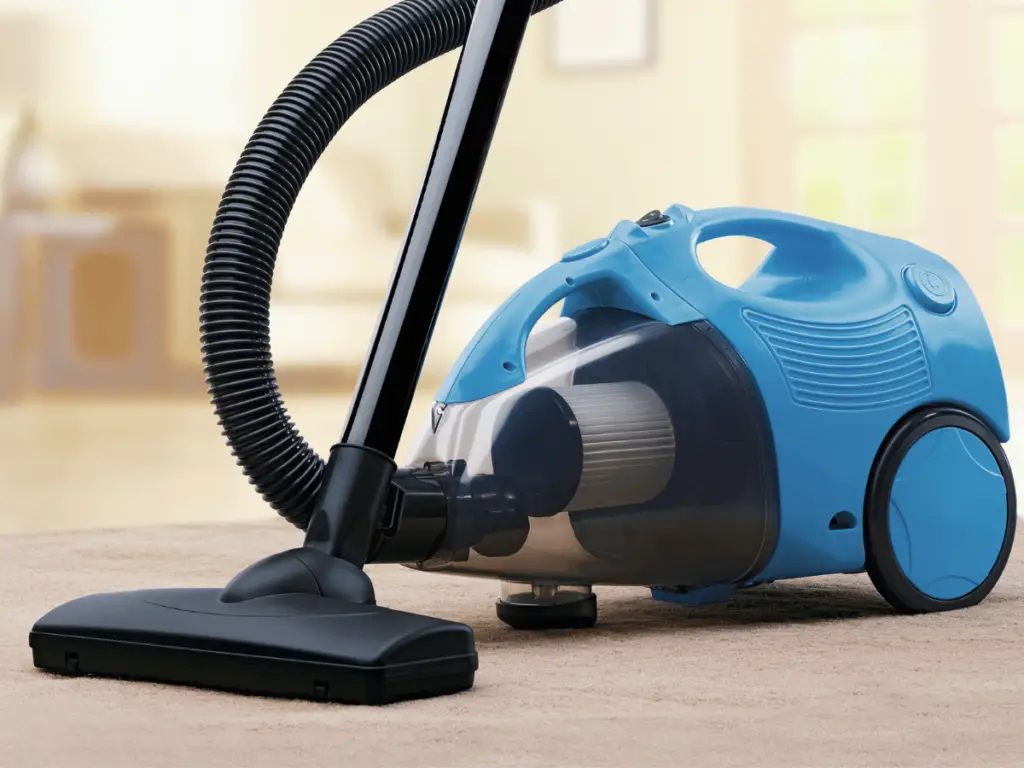
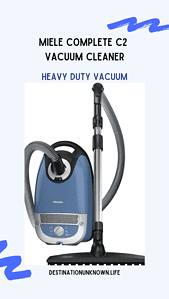
This vacuum is more bulky and heavy than the stick vacuums, and it takes up more space; however, the trade-off is that it can hold more dust with a larger dust bag and filter. Furthermore, you don’t need to stress about if the battery is charged, since you plug it into an electrical outlet. However, this may not be the best solution to someone living off-grid since it may draw more power than the battery-powered alternatives.
Yes, you can use a vacuum in an RV! The biggest choice you’ll need to make is if you want to use a battery-powered or plug-in vacuum. The battery-powered vacuums are often more compact but the battery life limits you to 60 minutes of cleaning at a time. Whereas, the plug-in vacuums offer more dust storage for a deep clean with no time restrictions.
What is the best thing to clean an RV floors with?
When I live in my RV, I sweep daily because dirt and dust always seem to make their way in; however, sweeping does kick up the dust. Using a vacuum cleaner allows me to suck up particles at the source and it can be a fair bit faster than sweeping. I’ll mop the floors, if needed.
How do I clean the dust out of my RV?
Personally, I find the best tool to clean the dust out of an RV efficiently is by using a vacuum cleaner. Sweeping kicks up the dust, but a vacuum can get that stuff at the source. Additionally, it can really do more with suction to remove hair and crumbs stuck in hard-to-reach places like couch cushions and corners.
Resources
Below are resources and reviews of vacuums from other RV owners.
Leave a comment below on what helps your RV stay clean. As a family of five, I always found it a struggle, even in a small space, to keep the dust at bay. We always took our shoes off at the door and spent a few times during the day washing the bottom of our feet, yet they were always black again from the interior floors! I hope that in writing about the best RV vacuums others can set a base expectation of how to clean their tiny home efficiently and effectively!
Related Content
If you are looking for other RV product reviews, then check out these:
Disclosure: Some of the links in this article may be affiliate links, which can provide compensation to me at no cost to you if you decide to purchase a paid plan. Thank you, if you do. As an Amazon Associate I earn from qualifying purchases. This site is not intended to provide financial advice and is for entertainment only. Read our affiliate disclosure in our privacy policy.
In this article, we will go into some pros and cons between a skoolie versus a more traditional RV like a Class A or B camper. The goal of this article is to compare apples to apples, so to speak.
Additionally, we aren’t going to include items surrounding vehicle and home maintenance since these are needed in both vehicles and can vary widely depending on care and construction.
What drives you to purchase one of these vehicles is the adventure and freedom to explore it from the comforts of your own (moving) home. Whether you choose to purchase a more traditional RV or break out of the mold with a skoolie, there is no right or wrong answer.
We will not dive deep into the skoolie topics that have a lot of misinformation surrounding them like the examples below. Instead, I invite you to read some of the blogs I’ve written to address those topics by following the links!
A skoolie is a custom motorhome or RV conversion. The name “skoolie” originated because these recreational vehicles are built using an American school bus frame. That said, the term skoolie can be used to cover a variety of other alternative bus conversions like mini-buses, ambulances, and police transportation buses.
What is a RV?
An RV is short for recreational vehicle. It is a broad name for liveable vehicles that are lived in usually part-time or seasonally, though many have taken to living in them year-round especially in more moderate climates in the south. Examples of RVs include pull-behind trailers like a fifth wheel and motorized vehicles like a Class A, B, or C motorhome or school bus conversion.
In North America, you will often hear the term RV used in lieu of motorhome, even for year-round vehicles though the name implies otherwise.
What is a motorhome?
A motorhome is a broad name for motorized homes. As the name implies, it describes a vehicle that carries a home. Examples of this may include school bus and van conversions, and Class A, B, and C recreational vehicles. The term motorhome is more commonly used outside of North America.
What are the Benefits of a Skoolie Compared to an RV?
Some benefits of a skoolie compared to an RV are the customization, affordability, and sustainability.
Customization
If buying a completed rig, your skoolie will be uniquely customized by the builder, whether a professional or DIY owner. If you’re building it or designing it yourself, it will still be uniquely made by you.
Affordability
Probably the biggest appeal to a skoolie is the huge price gap between the vehicles. Skoolies are wildly more affordable and therefore have lower barriers to entry for those that want to travel but are on a small budget.
Sustainability
“Reduce, reuse and recycle” is a phrase we all know. All three apply when downsizing and recycling a retired school bus into some useful – giving something old a new purpose. That feels quite good.
Engine Longevity
Our retired school bus had about 150,000 miles on it, and every diesel mechanic spoke with said that made it only an adolescent (young) bus in terms of mileage. It’s not uncommon to see these buses going strong after 250,000+ miles with regular and recommended maintenance.
Body Longevity
A school bus frame, ribs, and body is made of steel to make it as safe as possible on the road in case of an accident.
Safety
School bus are build to transport children, and are manufactured with strict guidelines in place to make them as safe as possible. This was probably the number one reason why we choose to build a skoolie for our family of five and you can read about that in this blog.
Amenities
The available amenities to living in a skoolie are on par with living in a traditional class A RV in many cases. Due to the custom nature of a skoolie, there really isn’t much you can’t have in it. For example, do you want a “toy hauler” but don’t like the $400,000+ price tag? Just build a skoolie toy hauler like this guy.
What are the Downsides of Skoolie Compared to an RV?
Some downsides to purchasing a skoolie are the length of time to complete a conversion, various types of construction small resale market if you decide to sell or buy, and no warranties on what you purchase.
Length of Time to Build
Unless you’re a professional tradesmen, you can expect a build with basic quality of life items such as plumbing (water, sewer, gray tanks, etc), electricity, and finer finishes such as kitchen, bedroom, and bathroom, to take you between 7 months to 2 years to complete with regular labor. If you’re hiring out or paying someone to convert your rig for you, there may be a waiting list and you are at the mercy of the tradesman’s schedule.
Small Resale Market
Plans change, so how will you sell off your rig if this isn’t the life for you any more? A private exchange will be your best option since most commercial dealers won’t know how to value your rig properly. That can mean many long months of talking with tire-kickers and low-ballers.
No Warranties
There is no governing body that regulates the building or design of skoolies, so each build will have a flair of its own. This disadvantage could also be an advantage too, because you may have a better understanding of the inner workings of your home then if you paid a lot more money on a Class A, and you don’t know how it was built.
No AC While Driving
There may be some work around to this, but our bus didn’t have great AC to begin with and the engine block is inside the bus, so it was quite warm while driving in hot climates, even with the windows open.
Loud While Driving
This may vary for vehicles that don’t have the engine block inside the rig; however, ours is located inside. That makes it very difficult to talk in a normal voice when driving because the diesel engine is very loud.
Is it Cheaper to Buy an RV or Convert a Bus?
It is cheaper to convert a bus than buy an RV, in most cases. The sticker prices of non-converted buses and even many fully converted buses are lower than the selling price of a new RV of the same size.
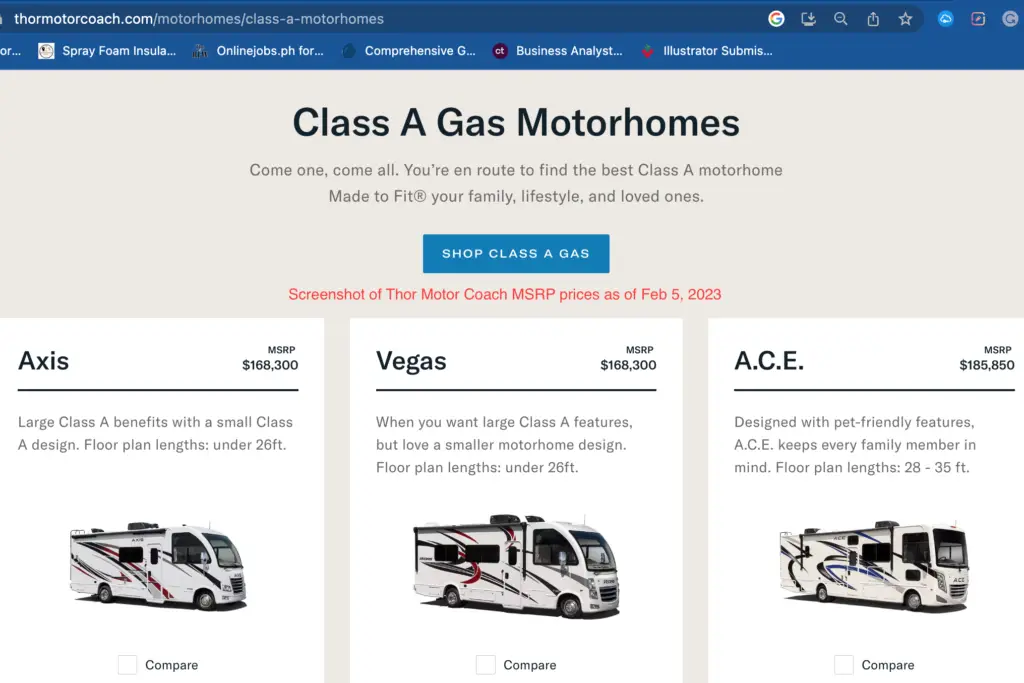
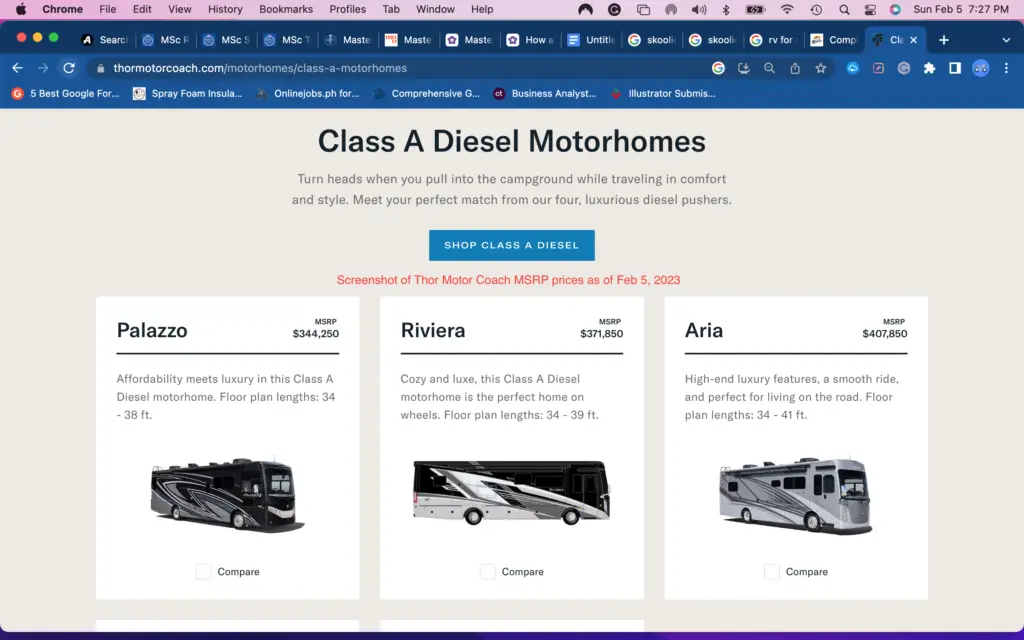
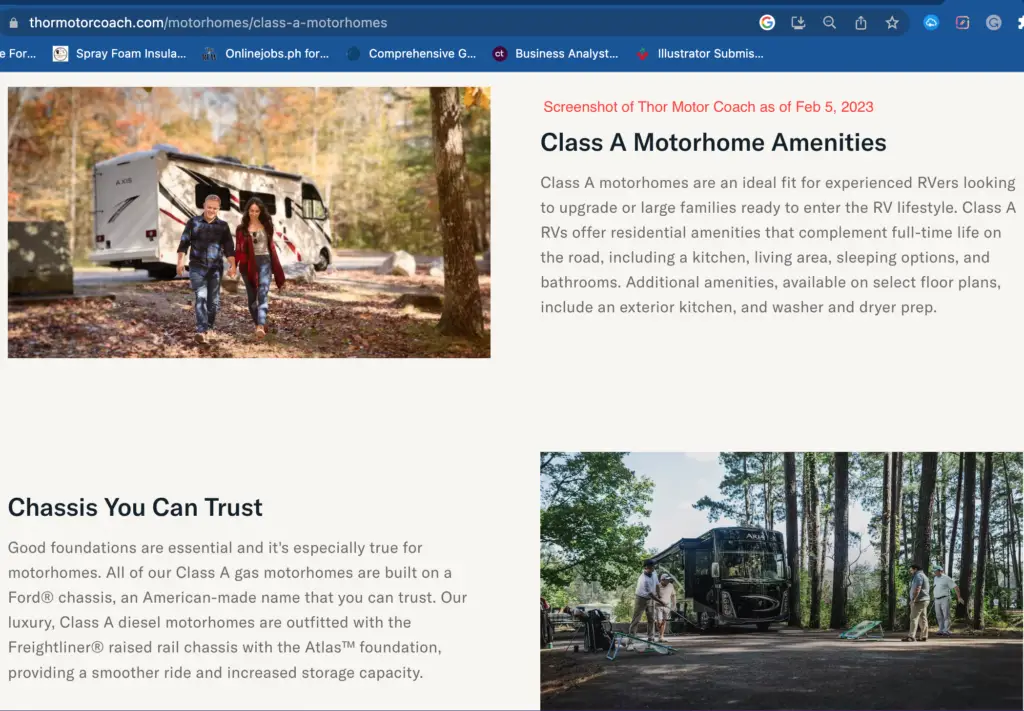
As an example, Thor Motor Coach sells gas 26’ motorhomes starting at $168,300. The cheapest 34’ diesel motorhome they sell starts at $344,250.
Our 34’ diesel school bus cost us about $50,000 to convert ourselves over 8 months. You can read our full budget here.
Is it better to live in a bus or an RV?
That’s a personal question and subjective depending on if you’re “team skoolie” or “team RV.” Included below are resources from people on either side of the debate.
Team Skoolie
In my personal opinion, we found that we loved living in our RV. My entire blog is dedicated to being pro skoolie, and here is a fundamental blog on why we purchased a school bus.
Below are some other resources supporting skoolie living:
We loved the freedom our skoolie gave us when the rest of the world was locked down and trapped inside their homes in 2021. We traveled to 14+ states over six months, and learned a lot along the way.
No matter which vehicle you chose to make your adventure in, just get out there and do it. You won’t regret it!
Considering hiring a skoolie builder for your bus conversion?
Updated for 2026 – If you’ve decided that you want to hire a reputable professional to help you convert your school bus into a stunning mobile dwelling or assist you with fully custom mobile conversion, then comes the task of finding actual pros to do the work!
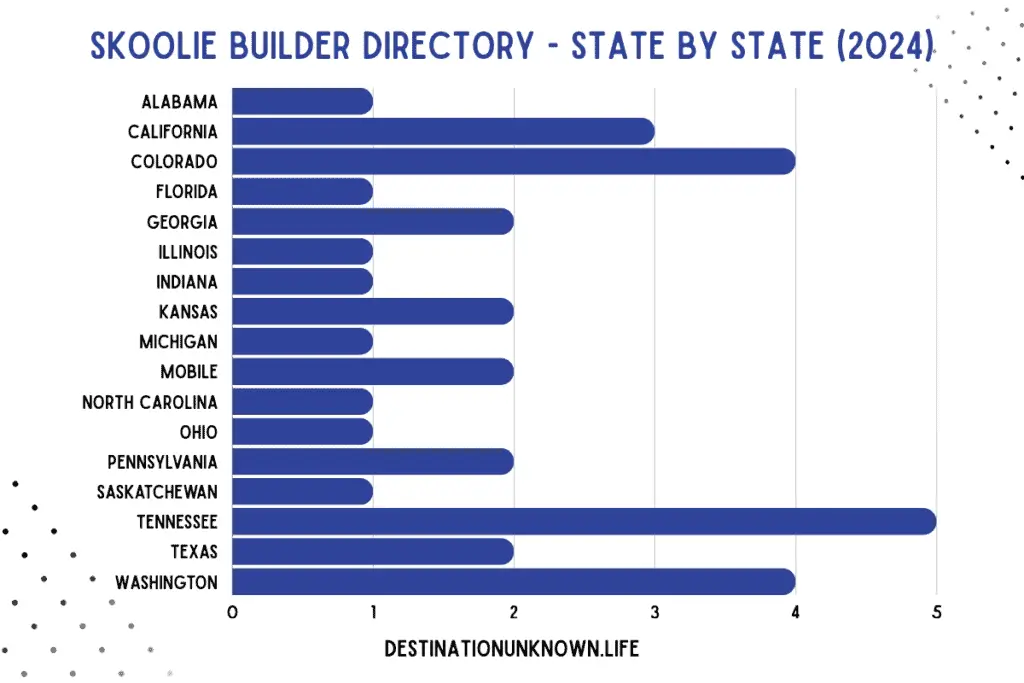
The Skoolie Builder and Custom Mobile Conversion Directory is a growing resource resulting from hours of research across the internet and forums, Facebook groups and word of mouth. I’ve just updated it with 40+ skoolie builders in the US and Canada!
The list is organized by US state and Canadian province (ehh!), so you can find a builder near you or even a mobile solution.
Find a mobile builder for hire in the skoolie directory
Within the skoolie directory, you’ll find mobile builders that can help you in with your skoolie conversion at all stages.
Full custom mobile conversion
Partial mobile conversion
As-needed solutions like roof raises, solar and plumbing
Consultations
The list is composed of builders and individuals specializing in custom mobile conversions and vehicle conversions either as their primary business model or some part of how they earn income. Some of the mobile conversion specialists are budget-friendly while others produce a high-end product (aka. high cost!).
Furthermore, not all of these builders specialize in only skoolie conversions. For example, if you only need upholstery help then a limo or party bus manufacturer is going to offer some sick options that may be in your budget. A food truck builder is going to have extensive experience running plumbing, electrical and gas lines for a mobile application, but they may not be the best solution for a full conversion with living spaces.
This list is not a complete list so if you know anyone that should be on the list, fill out the form below.
Contracts and Terms of Service
I do not have affiliation with any of these builders, nor have I received compensation to create this post. It is your responsibility to make a connection with a service provider and do your due diligence in hiring, contract negotiation, and paying.
For any financial agreement, I recommend creating a simple contract, payment terms, and terms of service with any service provider. This contract will help you if things go sideways and you end up in a legal battle.
This is is a compilation of providers and I have no affiliation with them. However, I have purposefully excluded builders based on strong negative feedback found in forums, Facebook groups like Skoolie Nation, Skoolie Girls and Skoolie Planet and public Google reviews.
We live in a time where it is easy for the customer to share evidence of poor work in the form of photos and texts. I think that is great since it puts the power in the consumer’s hands, within reason.
Though this isn’t intentionally a “watch dog” post, I am compassionate towards the skoolie community and the receivers of poor skoolie builds and vehicle service, a large majority of those receivers being women.
Disclaimer: It is your responsibility to make a connection with a service provider and do your due diligence in hiring, firing, and paying.
Join the skoolie builder directory
If you are a custom skoolie builder, mobile dwelling specialist that loves the skoolie community, or service provider that can help out the skoolie community then we would love to see you on the list.
The skoolie directory is an ever-growing project and resource for the bus conversion community. Currently, there are 25+ mobile dwelling builders listed across North America and I would love to see that list grow to at least cover each American state and Canadian province (ehh!). Additionally, the mobile conversion specialists can provide bus build support at all stages.
If you want to be added to this growing list or know someone who should be, fill out the form below.
Loading…
FAQ
How do I find a skoolie builder?
If you’ve decided that you want to hire a builder to help you partially or fully build your school bus conversion, then you need to decide first if you’ll use a builder near you or drive your bus to a contractor.
To find a skoolie builder near you, you can look through the Skoolie Builder Directory above, visit forums such as Skoolie.net, and request recommendations from Skoolie groups on Facebook.
Disclosure: Some of the links in this article may be affiliate links, which can provide compensation to me at no cost to you if you decide to purchase a paid plan. Thank you, if you do. As an Amazon Associate I earn from qualifying purchases. This site is not intended to provide financial advice and is for entertainment only. Read our affiliate disclosure in our privacy policy.
Welcome to the complete skoolie supply and shopping list essentials for our school bus conversion.
We noticed during our conversion that there was no to limited available information on how a single person or family built out their school bus conversion, and that’s why I created this list. If you’ve seen our skoolie walkthrough tour and think “oh, that’s a cute shampoo holder” or “I wonder what size mini-split AC they bought for a 40 foot bus,” then we’ve got it listed here for your convenience.
Our tiny home on wheels took seven months to build out for our family of five between 2020 to 2021. We purchased 90% of our supplies on Amazon, 8% came from the big-box stores like The Home Depot and Lowe’s, 1% came from our special order off-grid appliances (fridge and range) and lithium batteries, and the remaining 1% came from local specialty stores like plumbing and gas supply stores.
This is a long blog post so I’ve included a handy table of contents below that will take you to the section you need. If you need to navigate back to the top of the article, click the arrow in the bottom right-hand corner.
Table of Contents
Plumbing
These are the products we used to run our water supply lines (including pump), sewer lines, hot water heater, fresh and gray water tanks, compost toilet, and water filtration, and the finishes in our bathroom and kitchen in our school bus conversion.
We used a flexible pex tubing to run our water supply lines, and we’ve been very happy with the ease of installation and ease of repair, if and when that occurs.
I highly recommend drawing out a floorplan of your rig and its plumbing system to find any obstacles before you begin cutting holes.
Clean drinking water is imperative in an RV. Unfortunately, you often don’t know what quality of water you’re bringing into your fresh water tank and to the drinking faucet. We filter our water flowing into our fresh water tank using an in-line RV filter that simply connects to the hose. Additionally, we purchased a multistage water filter that installed in a few minutes underneath our kitchen sink – the “drinking faucet.”
These are the products that we used in our skoolie to filter our fresh water at two points:
the exterior water source
the drinking water coming from the kitchen sink.
Bonus: A metal filtered water bottle for when you’re on the go!
If you’re not sure what size fresh water tank you need for your family, read this blog. If you’re wondering what size gray water tank is right for your build, then this blog answers that for you.
We all love good-looking and functional kitchens and bathrooms, especially when living tiny. Here is a list of items we used to finish our skoolie kitchen and bathroom, specific to plumbing.
If you’re unsure where to start when tiling your skoolie shower, read this blog.
This is a personal preference but seeing our solids even with the coconut coir and a toilet seat isn’t a first choice in an expensive remodel. Instead, it would have been nicer to have an all-in-one system that was still diverting urine but looked a bit more like a toilet.
[lasso id=”4″ link_id=”2149″ type=”table”]
Liquid propane gas
We installed black pipe for our exterior gas lines that ran under the bus. We secured them to the metal frame with metal zip ties. The fittings listed below reflect the shape and size of the products we used; however, they are not an exact match. We recommend you visit a plumbing or gas supply shop for these products.
Appliances
We purchased a 20″ propane range from Unique Appliances, which is made for off-grid applications. The one listed here is not the same unit, but a similar size and style.
My husband estimates we spent between $10,000 to $12,000 on our solar array, which is not a small chunk of change, and it allowed us to easilylive off-grid with solar power for electricity (and propane for cooking).
After we calculated how much energy we use in our energy audit, we followed the diagrams from Explorist.life to help us find a solar array that worked for our family of five living full-time in the bus.
We ultimately purchased the interior solar array elements like lithium batteries and inverter through Battleborn directly during a “cyber Monday” or “returns Wednesday” sale around Thanksgiving, and saved a little money there, and the exterior solar array elements like the panels from Amazon.
Being safe was of huge importance to us in this rig since our family would be living in it. My husband consulted with and hired three different electricians to review his work on solar and the 12V and 110V electrical systems. We recommend you hire professionals too! He spent at least 2 weeks prior to starting diving deep into electrical, solar set-ups, etc, and then purchasing the products for each system. He then spent close to one month learning how to install everything correctly.
Electrical and solar were the most complex systems my husband had to learn in order to build our mobile dwelling. He spent weeks leading up to the installation just researching and learning everything he could. He consulted with licensed electricians in our personal network and specialists within electrical and solar that have worked with skoolies or a mobile application before.
Additionally, my husband had licensed electricians perform inspections at the rough-in and final stages of our build. Having safe and sound electrical is paramount when living in any home, especially a mobile dwelling.
Below, you’ll find the products we used in our 110V and 12V electrical arrays. Check in the solar section of this article for products in that category.
We highly encourage you to budget for electrical and solar consultations and inspections.
The wood and sheet metal used in our framing and finishing came from either The Home Depot, Lowes and a local sheet metal company. As such, I won’t be listing out these supplies specifically since they were rather generic. Instead, I’ll list the supplies we used to assist in framing our school bus conversion such as tools, nails, etc.
We choose to insulate our rig and reduce thermal bridging with a few different products. We sandwiched thin ceramic fiber cloth insulation between the wood and metal bus frame.
When building the floors, we added rigid pink foam between the frames. Our subfloor and finished flooring were placed on top of that.
For the ceilings and walls, we insulated with a closed cell spray foam product (after the electrical and plumbing were installed).
Was this blog helpful to you during your build? Let us know in the comments.
Disclosure: Some of the links in this article may be affiliate links, which can provide compensation to me at no cost to you if you decide to purchase a paid plan. Thank you, if you do. As an Amazon Associate I earn from qualifying purchases. This site is not intended to provide financial advice and is for entertainment only. Read our affiliate disclosure in our privacy policy.
There are ten American school bus builders that are active school bus manufacturers in the United States of America. Some American school bus builders have been around for many years like Blue Bird, GM, Ford and Thomas Built Buses, and others are new to the scene such as The Lion Electric Co. and Pegasus Bus Company.
These companies are founded in the USA and have school bus manufacturing facilities in operation in America.
Below is a list of the US school bus manufacturers in operation today.
American school bus manufacturers in the USA | 2022