You’re not alone. A common question I see on skoolie forums from new and veteran skoolie owners is how to get insurance on your school bus conversion in a specific state, whether it’s still titled as a commercial vehicle or as a motorhome. So, I decided to do create a state-by-state Skoolie Insurance Directory of North America!
I spent 10+ hours scouring skoolie forums and websites for personal recommendations from the skoolie community and reaching out to insurance agents across North America.
My goal is that the Skoolie Insurance Directory will be a growing and reliable resource that provides helpful information to the school bus conversion community.
We have insured our skoolie twice; once when it was titled as a commercial passenger vehicle and again after re-titling the bus into a motorhome in Florida. We purchased our bus from a school board in Tennesee then transported it to back to Florida with a gap insurance policy.
What is included in the Skoolie Insurance Directory?
The directory is an easy-to-access resource filled with independent and commercial insurance agents from independent insurance brokerages and the usual commercial agencies across North America. Additionally, this resource will still be helpful, whether your bus is still registered as a commercial passenger or you’ve successfully converted the title to a motorhome. Finally, the information provided is listed state-by-state so you can quickly locate the best insurance provider for your place of residence.
The directory provides the:
State
Agent name and contact information
Insurance company
Type of vehicle being insured (RV, commercial passenger vehicle / bus)
If you’re having difficulty finding an insurance policy for your school bus conversion when calling the main line from big chains like Progressive and State Farm, then I highly recommend working with an independent agent, specifically one recommended in the Skoolie Insurance Directory or a local brokerage.
Oftentimes, when you’re working with someone in your community, they have a desire to help a neighbor and (most importantly) can shop across multiple insurance providers rather than just one. That saves you a whole bunch of time. Read my experience obtaining insurance on our skoolie RV in Florida here, including an example of our policy.
Can I get insurance on my school bus if it’s titled as a commercial vehicle?
Yes. A retired school bus is originally a commercial passenger vehicle. During it’s time of operating, it had an insurance policy and it can still obtain one, even after the bus is retired.
If you are in the process of retitling and/or rebuilding your school bus conversion, then work with your insurance provider to bind a commercial vehicle policy.
Another option is to find a short-term policy (aka. “gap”) policy to carry during the time that you’re renovating your rig. A gap policy can also be helpful if you purchase the bus out-of-state from your home location and you will transport it across state lines. Consult with your insurance agent on the best policy for you.
Can I get insurance on my school bus if it’s titled as a motorhome?
Yes. A retired school bus that has been re-titled as a motorhome or RV can obtain insurance. Different states and insurance providers have different requirements for what it takes to bind a motorhome policy. Nonetheless, there are several options available to you. Read this blog on how we easily insured our school bus RV in Florida.
Should I tell the Insurance Company that I own a Skoolie?
Yes, tell the insurance company that you own a skoolie. Firstly, once you provide the make, model and title, it is immediately obvious that you own a current or former commercial vehicle. Your goal in getting insurance is to insure your tiny home on wheels as either a commercial vehicle (if not titled as a motorhome) or as a motorhome (if it has been retitled as such).
Instead, work with a recommended insurance agent who can search for policies across multiple insurance providers and will come to bat for you with the underwriters.
For a list of recommended state-by-state skoolie insurance providers, download the Skoolie Insurance Directory.
Conclusion to Skoolie Insurance Directory of North America
I hope that this directory of Skoolie Insurance Providers in North America gives you peace of mind as you transition to bus life or try and scout our new providers for a better rate.
If you like this post, then you may be interested in these other related posts:
Disclosure: Some of the links in this article may be affiliate links, which can provide compensation to me at no cost to you if you decide to purchase a paid plan. Thank you, if you do. As an Amazon Associate I earn from qualifying purchases. This site is not intended to provide financial advice and is for entertainment only. Read our affiliate disclosure in our privacy policy.
Come with me as we dive into the best exterior paint for skoolies. I share what products we used and where you can buy them for your upcoming paint project.
Having painted our rig myself in 2021 and seeing the long-lasting finish of the products I used, I feel confident that the information I’m sharing will help you make the best decision for your upcoming paint project!
Additional Skoolie Paint Resources
Are you going deep into the rabbit hole on skoolie paint? Check out these blogs.
What type of exterior paint should I buy for my school bus conversion?
The type of paint you need for your rig depends on the body construction. If you purchased a retired school bus, the exterior is likely stainless steel or some other metal. In this case, it’s imperative that you choose a paint primer and tinted enamel paint that is made for:
Exterior
Durable, long-lasting finish
Metal
Rust-resistant
Oil-based
Budget-friendly
You can also use an automotive primer and paint, though these may come at a higher price point than the other oil-based paints that you can find at your hardware store.
Oil-Based vs. Latex Paint for a Skoolie
I recommend that you use an oil-based primer and paint (enamel) rather than a latex product for the exterior. Oil-based paint can be more forgiving, if and when you need to do sanding and touch-ups. Oil paint does smell so you’ll want to work with this in an open spaces with ventilation.
For the interior, I recommend using latex paint since it’s indoors and doesn’t put off the same odor as oil paint does.
In both cases, if you’re working on an unpainted surface like metal or wood, prime before applying the top coat.
What is the best exterior paint to buy for a school bus conversion?
We recommend products like Rustoleum and Valspar Anti-Rust Armor Enamel. Rustoleum products aren’t tintable but do come in a wide range of colors, especially for farming equipment like tractors.
Valspar Anti-Rust Armor (Oil-base) vs. Rust-Oleum (Oil-base)
If we hadn’t come across Valspar Anti-Rust Armor, we would have chosen a Rust-Oleum product, which has a good history and is easy to find at hardware stores. However, we wanted to make a custom color choice and the Rust-Oleum products on the market cannot be tinted though they offer a wide range of colors.
Valspar is the Lowe’s paint brand and you can purchase it there or on Amazon. Rustoleum is found at most hardware and paint stores, and on Amazon.
Both of these products are affordable, falling in about the same price range as a normal can of household paint.
Valspar is the home brand for Lowe’s Home Improvement stores, and you can only purchase it in their paint department or on Amazon.
How do I calculate how much paint I need for my Skoolie?
We recommend using a paint calculator to determine how much primer and paint enamel you will need to paint your school bus conversion.
Sherwin Williams has a paint calculator and I’ve linked that below.
We hired a professional painter to prep, prime, and paint the interior of our school bus. It took him two days (a total of 8 hours) to do the work and we paid him $750. The cost included paint and labor.
The prep work took the longest because he had to protect all of the products and fixtures in our completed rig. We also removed all cushions and personal belongings so he could work around everything.
Conclusion
Did you paint your skoolie with latex or oil paint? Let me know in the comments below.
Considering hiring a skoolie builder for your bus conversion?
Updated for 2026 – If you’ve decided that you want to hire a reputable professional to help you convert your school bus into a stunning mobile dwelling or assist you with fully custom mobile conversion, then comes the task of finding actual pros to do the work!
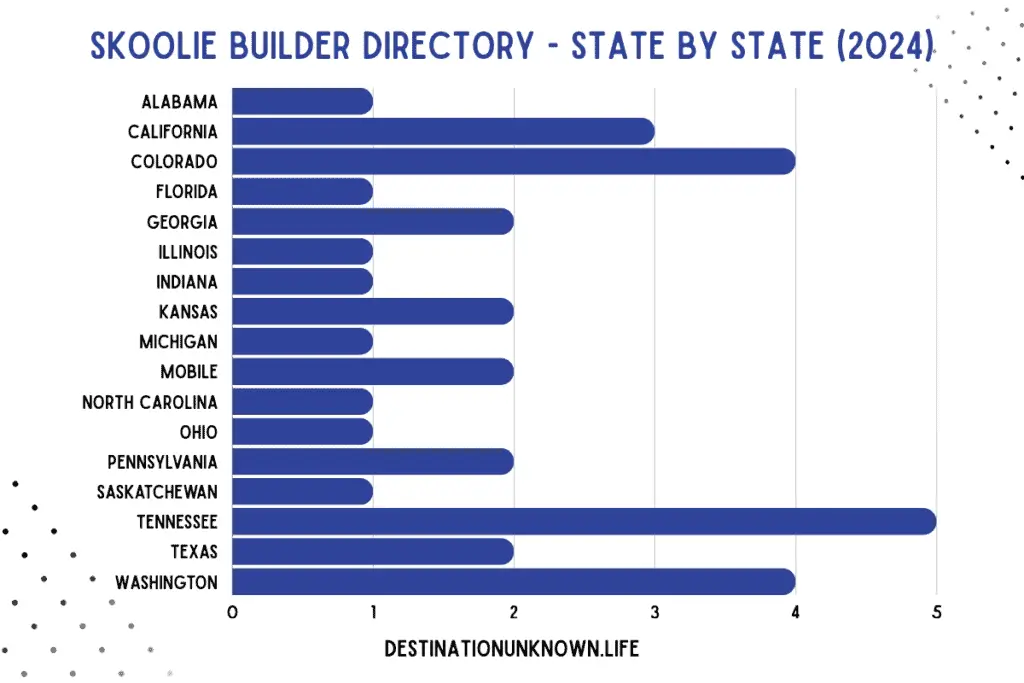
The Skoolie Builder and Custom Mobile Conversion Directory is a growing resource resulting from hours of research across the internet and forums, Facebook groups and word of mouth. I’ve just updated it with 40+ skoolie builders in the US and Canada!
The list is organized by US state and Canadian province (ehh!), so you can find a builder near you or even a mobile solution.
Find a mobile builder for hire in the skoolie directory
Within the skoolie directory, you’ll find mobile builders that can help you in with your skoolie conversion at all stages.
Full custom mobile conversion
Partial mobile conversion
As-needed solutions like roof raises, solar and plumbing
Consultations
The list is composed of builders and individuals specializing in custom mobile conversions and vehicle conversions either as their primary business model or some part of how they earn income. Some of the mobile conversion specialists are budget-friendly while others produce a high-end product (aka. high cost!).
Furthermore, not all of these builders specialize in only skoolie conversions. For example, if you only need upholstery help then a limo or party bus manufacturer is going to offer some sick options that may be in your budget. A food truck builder is going to have extensive experience running plumbing, electrical and gas lines for a mobile application, but they may not be the best solution for a full conversion with living spaces.
This list is not a complete list so if you know anyone that should be on the list, fill out the form below.
Contracts and Terms of Service
I do not have affiliation with any of these builders, nor have I received compensation to create this post. It is your responsibility to make a connection with a service provider and do your due diligence in hiring, contract negotiation, and paying.
For any financial agreement, I recommend creating a simple contract, payment terms, and terms of service with any service provider. This contract will help you if things go sideways and you end up in a legal battle.
This is is a compilation of providers and I have no affiliation with them. However, I have purposefully excluded builders based on strong negative feedback found in forums, Facebook groups like Skoolie Nation, Skoolie Girls and Skoolie Planet and public Google reviews.
We live in a time where it is easy for the customer to share evidence of poor work in the form of photos and texts. I think that is great since it puts the power in the consumer’s hands, within reason.
Though this isn’t intentionally a “watch dog” post, I am compassionate towards the skoolie community and the receivers of poor skoolie builds and vehicle service, a large majority of those receivers being women.
Disclaimer: It is your responsibility to make a connection with a service provider and do your due diligence in hiring, firing, and paying.
Join the skoolie builder directory
If you are a custom skoolie builder, mobile dwelling specialist that loves the skoolie community, or service provider that can help out the skoolie community then we would love to see you on the list.
The skoolie directory is an ever-growing project and resource for the bus conversion community. Currently, there are 25+ mobile dwelling builders listed across North America and I would love to see that list grow to at least cover each American state and Canadian province (ehh!). Additionally, the mobile conversion specialists can provide bus build support at all stages.
If you want to be added to this growing list or know someone who should be, fill out the form below.
Loading…
FAQ
How do I find a skoolie builder?
If you’ve decided that you want to hire a builder to help you partially or fully build your school bus conversion, then you need to decide first if you’ll use a builder near you or drive your bus to a contractor.
To find a skoolie builder near you, you can look through the Skoolie Builder Directory above, visit forums such as Skoolie.net, and request recommendations from Skoolie groups on Facebook.
Disclosure: Some of the links in this article may be affiliate links, which can provide compensation to me at no cost to you if you decide to purchase a paid plan. Thank you, if you do. As an Amazon Associate I earn from qualifying purchases. This site is not intended to provide financial advice and is for entertainment only. Read our affiliate disclosure in our privacy policy.
Welcome to the complete skoolie supply and shopping list essentials for our school bus conversion.
We noticed during our conversion that there was no to limited available information on how a single person or family built out their school bus conversion, and that’s why I created this list. If you’ve seen our skoolie walkthrough tour and think “oh, that’s a cute shampoo holder” or “I wonder what size mini-split AC they bought for a 40 foot bus,” then we’ve got it listed here for your convenience.
Our tiny home on wheels took seven months to build out for our family of five between 2020 to 2021. We purchased 90% of our supplies on Amazon, 8% came from the big-box stores like The Home Depot and Lowe’s, 1% came from our special order off-grid appliances (fridge and range) and lithium batteries, and the remaining 1% came from local specialty stores like plumbing and gas supply stores.
This is a long blog post so I’ve included a handy table of contents below that will take you to the section you need. If you need to navigate back to the top of the article, click the arrow in the bottom right-hand corner.
Table of Contents
Plumbing
These are the products we used to run our water supply lines (including pump), sewer lines, hot water heater, fresh and gray water tanks, compost toilet, and water filtration, and the finishes in our bathroom and kitchen in our school bus conversion.
We used a flexible pex tubing to run our water supply lines, and we’ve been very happy with the ease of installation and ease of repair, if and when that occurs.
I highly recommend drawing out a floorplan of your rig and its plumbing system to find any obstacles before you begin cutting holes.
Clean drinking water is imperative in an RV. Unfortunately, you often don’t know what quality of water you’re bringing into your fresh water tank and to the drinking faucet. We filter our water flowing into our fresh water tank using an in-line RV filter that simply connects to the hose. Additionally, we purchased a multistage water filter that installed in a few minutes underneath our kitchen sink – the “drinking faucet.”
These are the products that we used in our skoolie to filter our fresh water at two points:
the exterior water source
the drinking water coming from the kitchen sink.
Bonus: A metal filtered water bottle for when you’re on the go!
If you’re not sure what size fresh water tank you need for your family, read this blog. If you’re wondering what size gray water tank is right for your build, then this blog answers that for you.
We all love good-looking and functional kitchens and bathrooms, especially when living tiny. Here is a list of items we used to finish our skoolie kitchen and bathroom, specific to plumbing.
If you’re unsure where to start when tiling your skoolie shower, read this blog.
This is a personal preference but seeing our solids even with the coconut coir and a toilet seat isn’t a first choice in an expensive remodel. Instead, it would have been nicer to have an all-in-one system that was still diverting urine but looked a bit more like a toilet.
[lasso id=”4″ link_id=”2149″ type=”table”]
Liquid propane gas
We installed black pipe for our exterior gas lines that ran under the bus. We secured them to the metal frame with metal zip ties. The fittings listed below reflect the shape and size of the products we used; however, they are not an exact match. We recommend you visit a plumbing or gas supply shop for these products.
Appliances
We purchased a 20″ propane range from Unique Appliances, which is made for off-grid applications. The one listed here is not the same unit, but a similar size and style.
My husband estimates we spent between $10,000 to $12,000 on our solar array, which is not a small chunk of change, and it allowed us to easilylive off-grid with solar power for electricity (and propane for cooking).
After we calculated how much energy we use in our energy audit, we followed the diagrams from Explorist.life to help us find a solar array that worked for our family of five living full-time in the bus.
We ultimately purchased the interior solar array elements like lithium batteries and inverter through Battleborn directly during a “cyber Monday” or “returns Wednesday” sale around Thanksgiving, and saved a little money there, and the exterior solar array elements like the panels from Amazon.
Being safe was of huge importance to us in this rig since our family would be living in it. My husband consulted with and hired three different electricians to review his work on solar and the 12V and 110V electrical systems. We recommend you hire professionals too! He spent at least 2 weeks prior to starting diving deep into electrical, solar set-ups, etc, and then purchasing the products for each system. He then spent close to one month learning how to install everything correctly.
Electrical and solar were the most complex systems my husband had to learn in order to build our mobile dwelling. He spent weeks leading up to the installation just researching and learning everything he could. He consulted with licensed electricians in our personal network and specialists within electrical and solar that have worked with skoolies or a mobile application before.
Additionally, my husband had licensed electricians perform inspections at the rough-in and final stages of our build. Having safe and sound electrical is paramount when living in any home, especially a mobile dwelling.
Below, you’ll find the products we used in our 110V and 12V electrical arrays. Check in the solar section of this article for products in that category.
We highly encourage you to budget for electrical and solar consultations and inspections.
The wood and sheet metal used in our framing and finishing came from either The Home Depot, Lowes and a local sheet metal company. As such, I won’t be listing out these supplies specifically since they were rather generic. Instead, I’ll list the supplies we used to assist in framing our school bus conversion such as tools, nails, etc.
We choose to insulate our rig and reduce thermal bridging with a few different products. We sandwiched thin ceramic fiber cloth insulation between the wood and metal bus frame.
When building the floors, we added rigid pink foam between the frames. Our subfloor and finished flooring were placed on top of that.
For the ceilings and walls, we insulated with a closed cell spray foam product (after the electrical and plumbing were installed).
Was this blog helpful to you during your build? Let us know in the comments.
Disclosure: Some of the links in this article may be affiliate links, which can provide compensation to me at no cost to you if you decide to purchase a paid plan. Thank you, if you do. As an Amazon Associate I earn from qualifying purchases. This site is not intended to provide financial advice and is for entertainment only. Read our affiliate disclosure in our privacy policy.
To put it simply, skoolie life is affordable living and the freedom to roam and adventure on your own terms. The freedom to pack up and go while taking your tiny home on wheels and your most-loved belongings is unconventional but it often answers a calling or need to live outside the box and experience the world from a different perspective.
Living in a school bus conversion appeals to people from all walks of life who have a desire to travel and explore: families, pet parents, single persons, couples, retirees, digital nomads, and more. You can also choose to experience your skoolie life as a weekend warrior, part-time like a snowbird or be a full-time nomad.
Our family of five spent seven months converting a retired school bus into our dream tiny home on wheels that we lived and traveled in full-time for six months from Florida to Maine and back. Now, we have our school bus conversion parked in long-term storage with plans to turn her into a short-term rental.
In those six months of living on our skoolie, we reconnected with family and friends we hadn’t seen in years, visited so many new places, made new acquaintances, and sparked something we had been missing since the pandemic lockdown forced us into our homes in 2020. For our young children (1, 3 and 4 years old at the time), they still had a place they could call home and still talk about our adventures in the Hildebus to this day.
Converting a school bus into a dwelling has been around for as long as school buses have been around, and has really burst into the mainstream spotlight with a positive “glow-up” in the past 10 years as the tiny home movement has exploded.
Building a school bus conversion used to be a simple way of living and traveling, made memorable in the 1960s and 1970s as part of the American hippie movement. These days, you can find really basic and affordable school bus conversions all the way up to high-end custom tiny homes.
Are skoolies worth it?
Yes. Skoolies are worth it if you are looking for an alternative and affordable home that is customizable though assigning an actual dollar value can be difficult since each school bus conversion is unique. Some people spend months or years building out their tiny home on wheels before moving in at completion, like we did – 7 months! Others choose to demo the interior and build as they can afford to while living aboard. In both cases, a housing need is solved and adventure begins.
As far as assigning a value like you would for the purchase and sale of a traditional class A RV, that is a rather difficult assessment to make since every skoolie conversion is unique. In most states, there is no standard building code that applies to how a skoolie is built and it is up to the owner to decide what finishes they wish to install and the quality of work they will perform.
Hildebus skoolie tour
In our case, we built a mid- to high-range skoolie. We purchased our retired school bus for ~$4,500 in 2021 and put in $45,000-$50,000 between the demo, repairs, framing, electrical, solar, plumbing, paint, and custom finishes like quartzite countertops, tiled backsplash, vinyl flooring throughout, propane range, mini stove, 12V fridge and freezer, and more.